It begins late at night, once the flat has gone quiet and you are attempting to drift off to sleep.
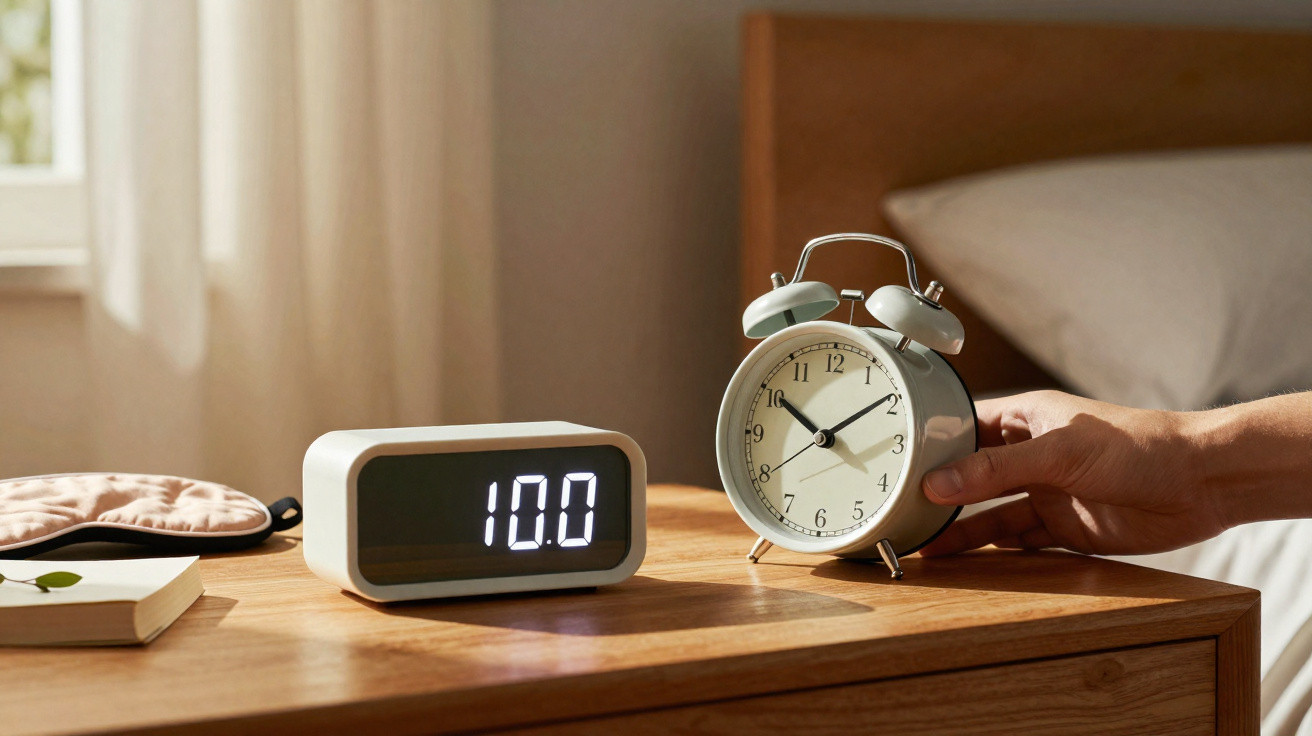
From the kitchen comes a faint, steady sound through the door: tick… tick… tick… as regular as breathing. You register it briefly, then your brain groups it with the refrigerator’s hum and the far-off lift. On the bedside table, meanwhile, a slim digital clock shines in silent blue numbers. It makes no sound at all. It simply sits there, relentlessly presenting the time. 00:37. Then 00:38.
The kitchen clock is the one making a noise.
But the true interruption sits beside your pillow.
It is the quiet, illuminated rhythm you keep checking.
Why is a loud clock less irritating than one that never ticks?
Why a distant tick disappears while a silent glow captures your attention
The brain is remarkably willing to tune out repeated sounds.
A clock ticking in the next room resembles a neighbour coughing once a second: you notice it initially, but it is soon labelled as “background”. Its rhythm is steady, foreseeable and harmless. Your auditory system responds well to patterns; once it has learnt one, it no longer needs to draw the rest of your attention to it.
The ticking blends into the wider soundscape of the home.
Much like outdoor traffic or the low murmur of plumbing, it becomes part of the ever-present background noise. You can still hear it when you deliberately listen for it. Most of the time, though, it falls beneath conscious awareness. Your brain makes a reassuring decision: this is not dangerous.
Put that same kind of stimulus in front of your eyes, however, and the effect is very different.
The silent digital clock produces no noise, but it glows directly within your field of view. Human eyes are designed to spot movement, shifts and, in particular, light against darkness. Each time the display changes, your attention gives it a small acknowledgement. You are not merely reading the time; you are sensing it move on.
Think about working on a laptop with a notification bubble repeatedly pulsing at the edge of your vision.
Even without opening it, part of your focus is pulled towards it. A digital clock can have the same effect on your feeling of calm. It is not loud in decibels; it is loud in the attention it demands.
There is an emotional dimension too.
A ticking clock elsewhere in the home does not repeatedly tell you, “You’re still awake”, “You’re late”, “You’ve been scrolling for 42 minutes”. It is simply a neutral sound. A visible clock, by contrast, is a measuring instrument fixed on your life. Its silent blue light may spark guilt, anxiety or a vague but persistent sense of pressure.
Your brain isn’t just processing light and numbers; it’s processing judgment.
Time moving through your visual field can feel like an unrequested performance review. As a result, a small object can quietly take over your mental bandwidth far more effectively than the modest ticking clock in the kitchen.
How to tame visible clocks so your brain can rest
A single, simple move can make a substantial difference: take the clock out of your direct line of sight.
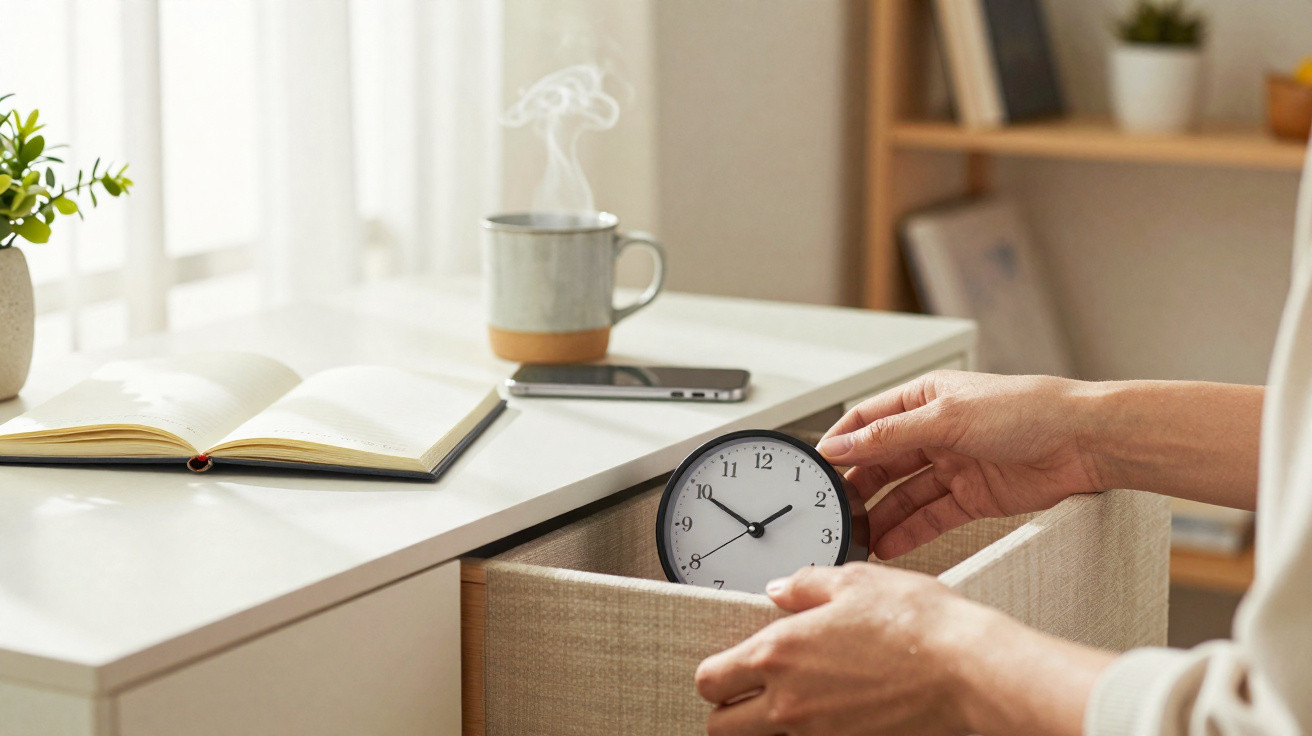
There is no need to put it in a drawer or on the other side of the room, where it can still shine at you from a wall. Move it slightly off-angle instead. Turn its display towards the wall, set it on a lower shelf, or place it behind a plant so that you have to lean over to check it.
This minor change interrupts the constant visual connection.
You retain the clock’s practical purpose without feeling as though it is watching you. Because it is no longer permanently present, your eyes stop checking it every few minutes. That can reduce the digital “pulse” enough to help your body unwind, whether you are working, reading or trying to sleep.
A frequent pitfall is the excuse of the “useful distraction”.
You may tell yourself that a large digital clock belongs on your desk “to manage your time better”. Before long, you spend half the day looking at it, feeling behind schedule and opening another tab to cope. Honestly, nobody does this every single day. Tracking time can swiftly become stressing about time.
Most of us know the moment when a clock feels more like an opponent than a useful device.
That does not mean you are weak or lacking discipline. You are human, with a brain that responds more powerfully to visual signals than you might want it to. Once you recognise that, adjusting your surroundings no longer feels like a moral failing; it becomes sensible design.
“Silence is not the absence of noise; it’s the absence of demands on your attention.”
- A sleep researcher told me this after removing the glowing clock from his own bedroom
To lessen those demands on your attention, try adjusting a few things:
- Select clocks with warm or dimmable displays rather than bright blue or white LEDs.
- Choose static faces, such as analogue or e-ink displays, instead of digits that continually change.
- Limit each room to one main clock, rather than three or four competing time signals.
- Keep at least one important area of your home largely free of clocks, often the bedroom.
- Check the time on your phone when necessary, rather than keeping it as permanent wallpaper on the lock screen.
Each option lowers the visual “volume” of time in daily life a little.
Together, they can return the clock to its role as a useful tool, rather than leaving it as a glowing metronome for anxiety.
The quiet power of choosing how you feel time
Once you begin to notice them, you may realise how many items around you quietly signal the passage of time. Fitness trackers vibrate on your wrist. Laptop corners display the hour. Microwave clocks flash 00:00 like a miniature emergency. None of these devices shouts, yet each communicates with your nervous system.
You do not need to discard every device or move into a cabin.
You can simply choose which signals deserve a front-row position in your senses. A gentle tick from down the hall may remain. A bright, silent bedside clock may not. A large timer on your work screen might be saved for brief, focused sprints instead of being left running throughout the day.
There is something almost radical about recognising that the quietest item can also be the most distracting.
Unlike a ticking clock, a digital clock does not disturb the air. But it can disturb your inner world and the way you talk to yourself about productivity, rest and control. Once you understand this process, you regain a small amount of control. You can reposition, turn, dim or hide that glowing rectangle without feeling ridiculous.
Consider it less as “removing distractions” and more as shaping your experience of time.
Not every second requires a display, and not every room needs a countdown. Some moments are softer when the only clock is in the next room, ticking away just beyond sight and allowing you to forget it for a while.
| Key point | Detail | Value for the reader |
|---|---|---|
| Visual time is louder than audible time | Silent digital clocks in view capture attention more readily than distant ticking | Helps explain why “quiet” devices can make you feel stressed |
| Small environmental tweaks matter | Turning or dimming a clock lessens its mental effect | Provides simple changes without purchasing new gadgets |
| Managing time signals is emotional hygiene | Visible time can prompt guilt, pressure and self-judgment | Supports kinder, calmer arrangements at home and at work |













Comments
No comments yet. Be the first to comment!
Leave a Comment