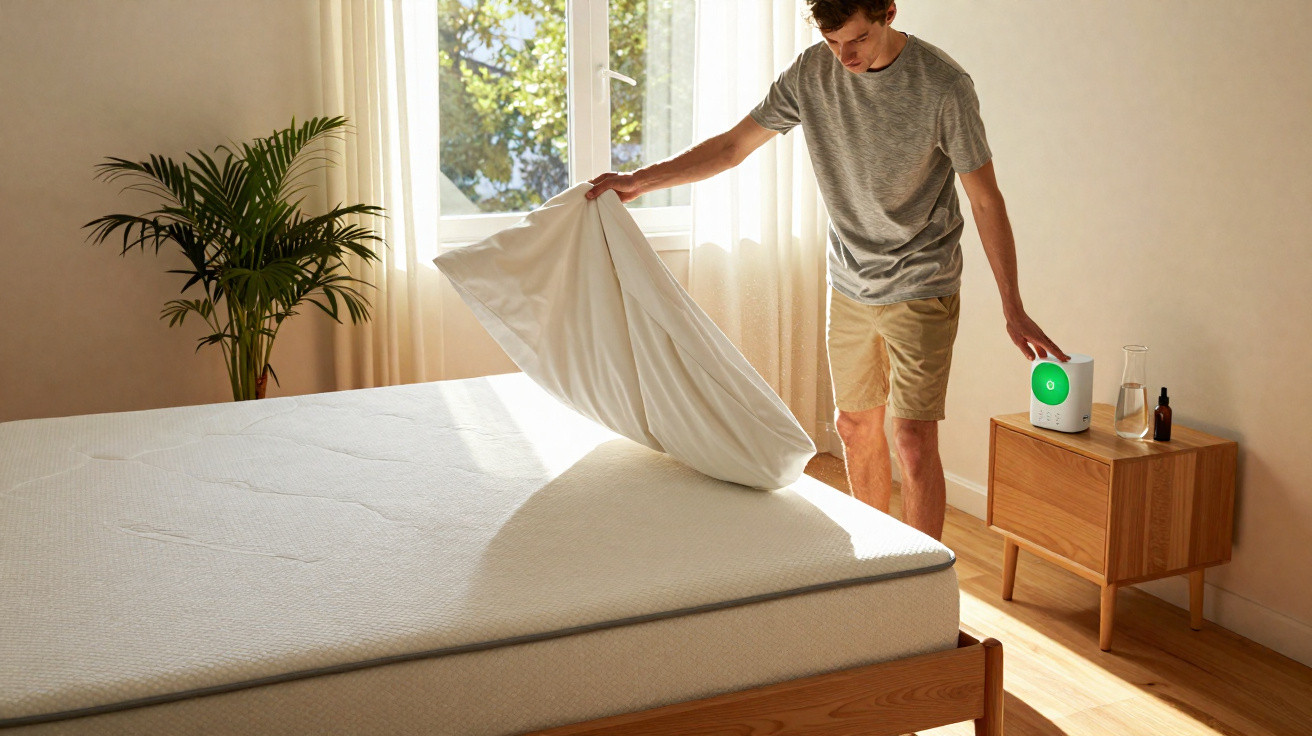
The window is open and the air on the landing feels crisp, but when you enter your bedroom at night, that faint, heavy odour is still there.
You have replaced the bedding, left the window ajar before bed and perhaps even bought an expensive candle labelled “fresh linen”. Within ten minutes, though, the room feels dense again.
As you lie there, you may wonder why a room you clean, air and look after still resembles a stuffy hotel room after a long day. The radiator clicks, the curtains hardly stir and the air feels... used. Not exactly dirty, simply exhausted.
On some evenings, you blame the city, the weather or the neighbour smoking on the balcony below. On others, you become accustomed to it, calling it “my bedroom smell” and carrying on.
Yet something else is gradually accumulating in the room.
What is really lurking in your “fresh” bedroom?
Most of us assume a stuffy bedroom is caused by inadequate ventilation or a missed cleaning day. Open the window, change the sheets and the problem should be solved. Yet plenty of bedrooms that feel oppressive by evening were aired only that morning. The factor rarely discussed is right in front of you: the materials in the room and the substances they release without notice.
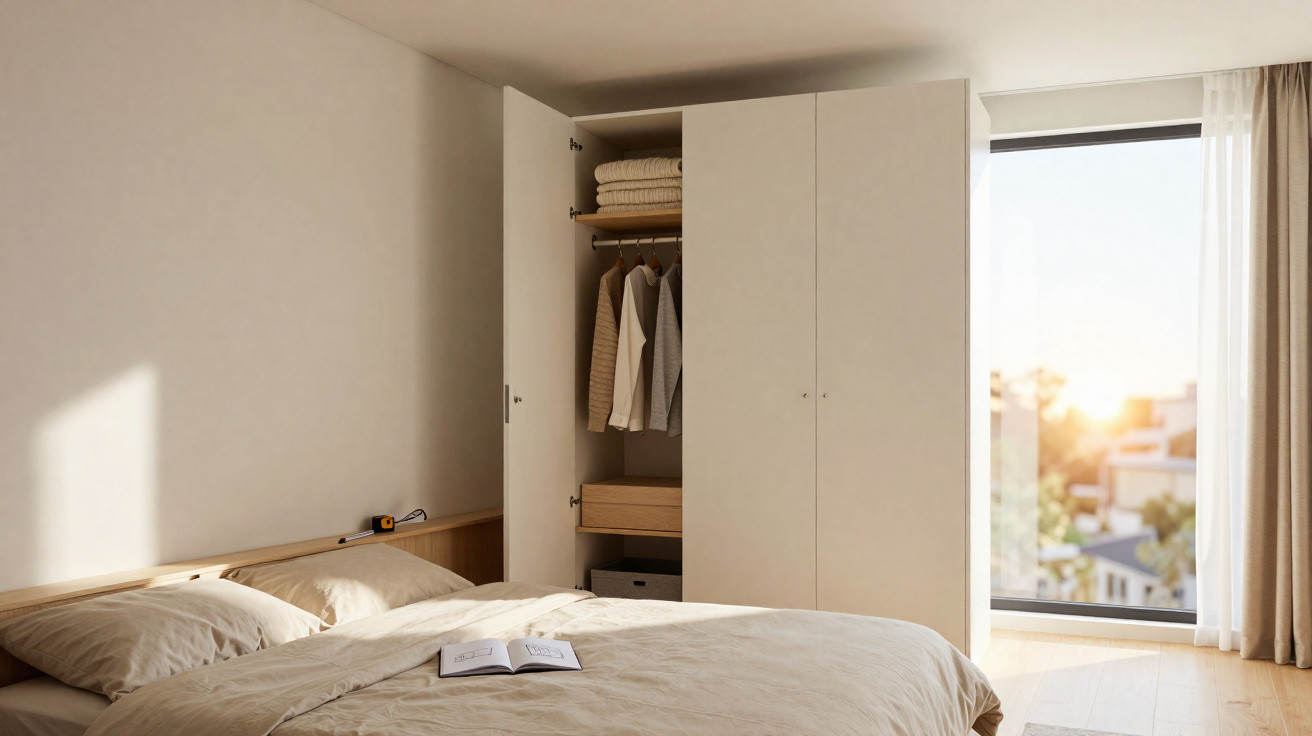
Mattress foam, wardrobes, paint, synthetic curtains, laminate flooring, candles and plug-in diffusers can all give off volatile organic compounds (VOCs). They are invisible and often barely detectable by smell, but they can quickly collect in a room where the door is regularly closed. The result is a bedroom that appears spotless but feels dense, as if the air has lost its freshness.
On a grey Tuesday in Manchester, an indoor-air specialist visited a couple convinced they had a mould issue. There were no visible marks and no damp walls, but their bedroom felt sealed off. They laughed uneasily when he took a small sensor from his bag. Thirty minutes later, its display turned red: VOC levels were up to five times higher than in the living room.
The causes were utterly ordinary: a new memory-foam mattress, a recently assembled wardrobe, two scented candles used each evening and a pile of synthetic cushions that were never washed. Each night, they left the window tilted open “for fresh air”, believing they were doing the right thing. The air was not dirty in the traditional sense – it was saturated.
Indoor-air research across Europe reflects the same trend. Bedrooms frequently carry higher pollutant loads at night than kitchens, even in homes where people ventilate. We spend hours there with doors shut, breathing, perspiring and releasing CO₂ and moisture into a space already affected by emissions from fabrics and furniture. That soft, faintly sweet “bedroom smell” is often a combination of humidity, skin particles, residues from cleaning products and materials that are still off-gassing rather than being properly cleared away.
Imagine the bedroom as a slow cooker. It receives heat from your body, moisture from your breath, particles from clothes and bedding, plus invisible gases from the mattress, wardrobe and flooring. Then the lid goes on: a shut door, thick curtains and a partly open window that creates barely any through-draught.
Air needs more than an entry point; it also needs an exit. Without genuine circulation, VOCs and CO₂ build up. Your brain interprets this as stuffiness, even where a brief morning airing has technically brought fresh oxygen into the room. The bedroom may be cool yet still feel unpleasant. That is why stepping into a 16°C bedroom can still feel like breathing through cotton wool.
This cause is so often missed because we are taught to blame what is obvious: dust, piles of laundry and insufficient cleaning. We seldom link a new bed, a glossy sideboard or a “relaxing” diffuser with the compounds quietly entering a room where we spend a third of our lives.
Small changes that transform how your bedroom feels
The first useful measure is extremely simple: create proper air movement rather than merely symbolic ventilation. Pair an opening with a way out. Open both the window and door fully, even for only five to ten minutes, allowing air to pass through the room instead of simply circulating within it. A short, forceful exchange is more effective than leaving a window on its micro-vent setting for an hour.
If possible, open a window on the opposite side of the home at the same time to establish a real draught. The objective is not simply cooler air but replacement air. Do this once in the early evening, rather than only in the morning when nobody is sleeping there. It may sound obvious, but most bedrooms are never given a sufficiently strong flush of fresh air.
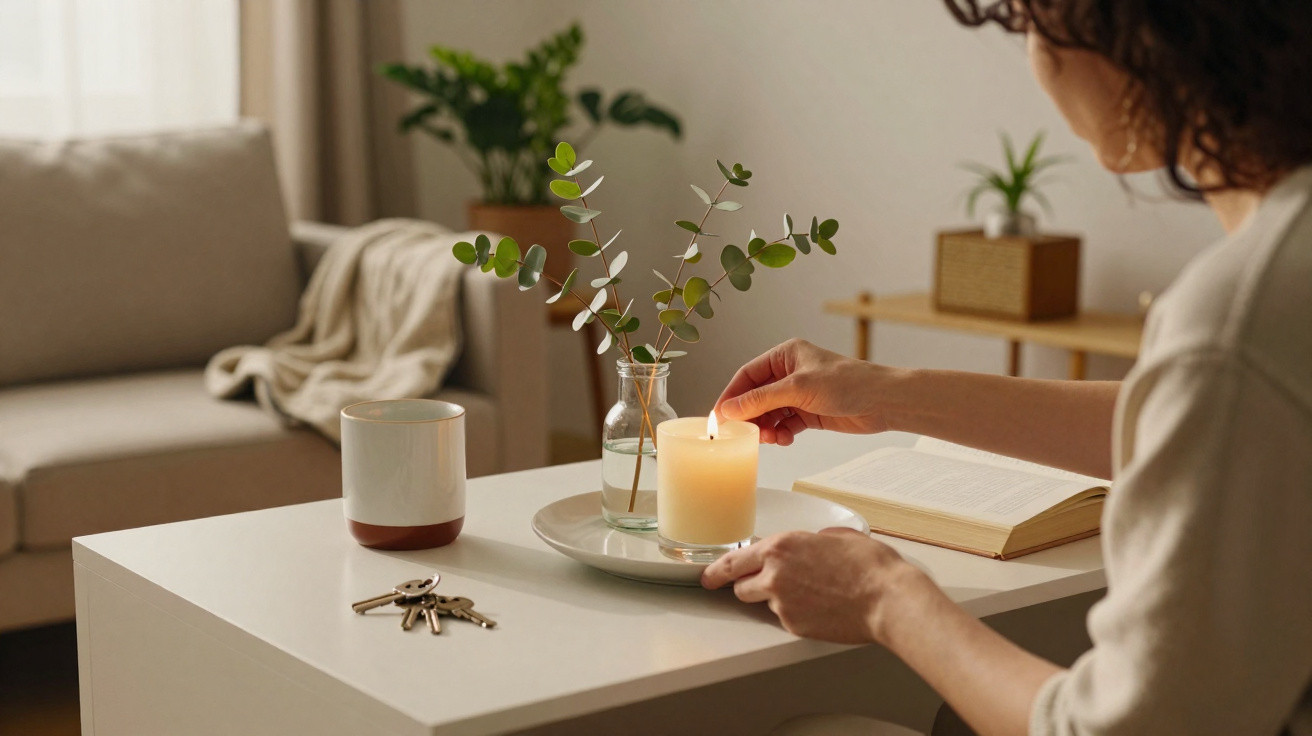
Then comes the less appealing task: dealing with the items quietly increasing the air’s load. That new-furniture scent you may secretly enjoy is, essentially, VOCs making themselves known. Test this for one week: stop burning scented candles in the bedroom, unplug diffusers, avoid fabric sprays on the bedding and leave the door open for at least an hour before going to sleep.
Pay attention to what changes. Many people say they wake with a clearer head and find that the room feels less flat and less “perfumed-thick”. It may be less Instagram-friendly than a candlelit headboard, but it is closer to what your lungs actually need. Let us be honest: nobody really does this every day, but trying it for even three or four nights can reveal what is truly weighing down the air.
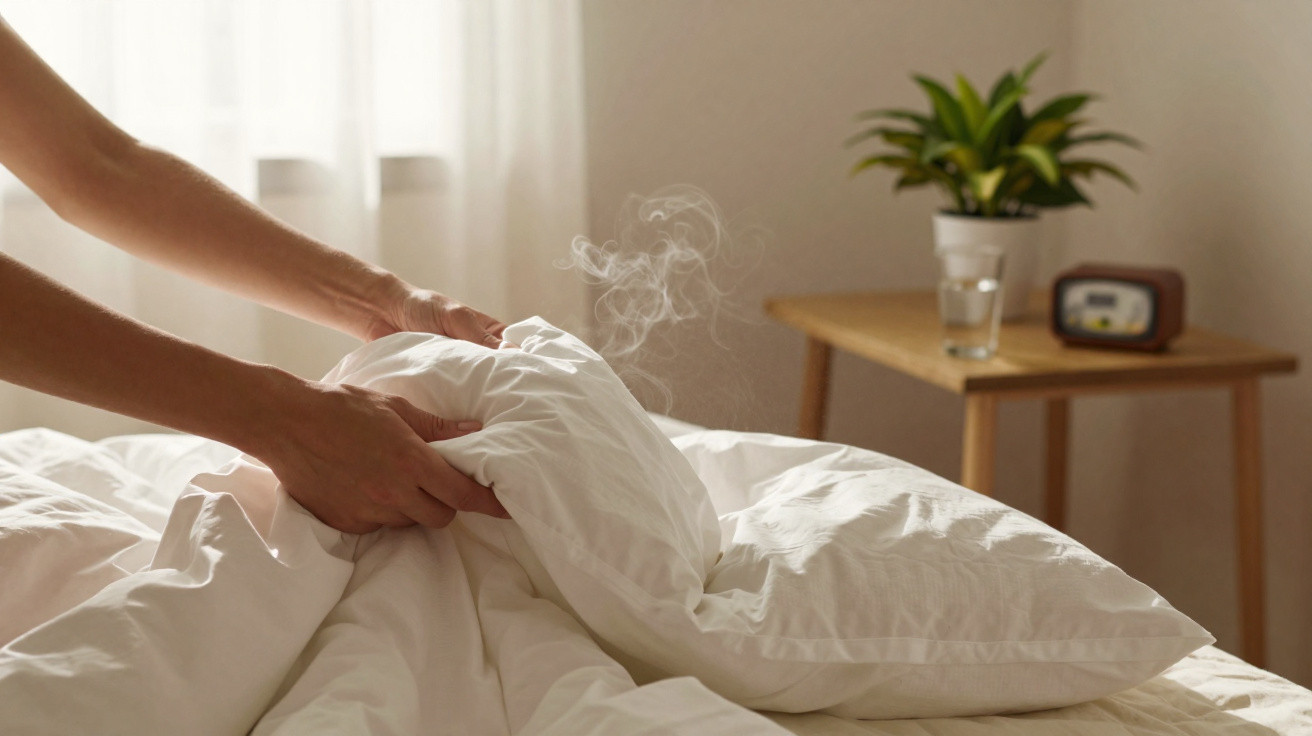
Your bed itself is another commonly overlooked factor. Mattresses and pillows soak up sweat and skin particles before gradually releasing moisture and odours. Making the bed immediately after getting up traps that humidity beneath the duvet. Leave the covers pulled back for at least half an hour, with the window open if possible. It is not “messy”; it is science.
A London allergist put it this way during a home visit:
“People talk about freshening the bedroom, but the real shift happens when you stop overloading it in the first place.”
Your “air diet” is nearly as important as your cleaning routine. Try to:
- Use unscented washing detergent for bedding from time to time, to interrupt the mix of fragrances.
- Rotate or air cushions and throws that never get any daylight.
- Add one low-maintenance plant, not as a miracle air filter but as a daily reminder that air is a living thing.
On a more emotional level, this means treating the bedroom less like a showroom and more like a space that breathes. We have all experienced waking with a dry throat and the feeling that we have not properly slept at all. That is not simply “bad sleep” – it can often be your body quietly objecting to the air it has spent the night processing.
A bedroom that breathes with you rather than against you
Once you begin to notice how a room feels, it is difficult to ignore it. There is the heavy stillness as you open the door at night, the clarity in your head when you step into the hallway and the trace of last night’s candle lingering near the wardrobe. These are signals, not personal quirks.
You do not need to become obsessed with indoor air, measuring every particle or banning everything scented. But you can gently reconsider the arrangement you have made with your bedroom. That could mean moving the oil diffuser into the living room, choosing a slightly less “plastic” mattress next time or simply making a habit of a five-minute airing with the door fully open before brushing your teeth.
It is striking how quickly the character of the room shifts when you alter just one or two things. Visitors may not notice, but you will, standing in the half-light and realising that the air no longer presses on your chest in quite the same way. The stuffiness was not merely you being fussy. It was a real physical build-up that had quietly become the background to your nights.
Discuss it with friends and similar stories emerge: headaches disappearing on holiday, better sleep in a cabin with wooden walls or the unexpected relief of spending a night at a relative’s house with the window wide open. These are not random anecdotes. They are small case studies in what occurs when a bedroom stops holding on to the air you exhale and the chemicals released by your furniture, and finally allows them to escape.
| Key point | Detail | Benefit for the reader |
|---|---|---|
| Hidden VOCs | Emissions from mattresses, furniture, paint and candles that saturate the air | Understand why the bedroom remains heavy despite airing it |
| Effective ventilation | Create a genuine, brief but powerful draught by opening the window and door wide | Quickly improve the feeling of freshness in the evening |
| Night-time habits | Limit fragrances, leave the bed open and reduce chemical sources | Sleep in lighter air, with less tiredness on waking |











Comments
No comments yet. Be the first to comment!
Leave a Comment