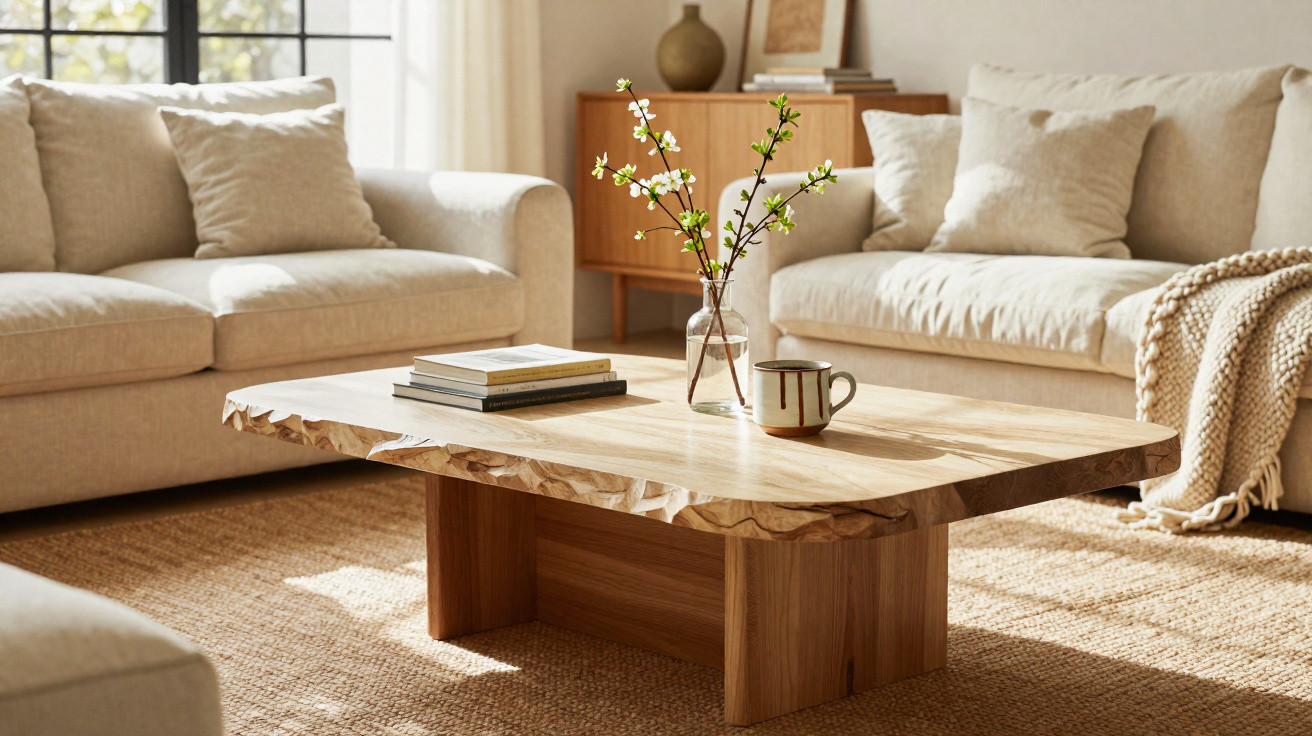
When rethinking a living room, it is easy to get caught up in cushions, ornaments and wall colours. Yet a considered change at the heart of the room can have far more impact: the coffee table. This is exactly where a trend currently endorsed by many interior architects and design advisers begins – moving away from flawlessly polished design and towards honest materials with edges, texture and character.
Why sleek designer pieces are losing their appeal
For the past few years, the rule seemed clear: the smoother, the smarter. High-gloss finishes, polished stone and immaculate surfaces all created the look of a show home. In everyday settings, however, many living rooms felt more cold than cosy.
Tables made from highly glossy stone in particular can often appear severe. Although they look striking in photographs, they can give a living room a detached atmosphere in day-to-day life. Family life, games nights and putting your feet up do not always sit comfortably alongside furniture that feels museum-like.
“The new motto is: less showroom, more living room that feels like everyday life – in the best possible sense.”
There is another consideration: very smooth, highly fashionable finishes do not age well. As soon as the next trend arrives, yesterday’s costly designer piece can quickly look dated. Many people want to step away from this and invest instead in something that will not feel out of time after only two seasons.
Tactile materials instead of a sterile finish
Alongside an increasingly digital daily life comes a growing desire for objects that can genuinely be felt. Not another screen or glass tabletop, but surfaces where the grain is visible and irregularities can be sensed.
This is precisely what the latest coffee tables offer. Minor marks, visible growth rings in the wood and gently uneven stone edges are no longer seen as flaws, but as character. Rather than simply shining, the tabletop tells a story.
Many people say they find themselves repeatedly running their fingers over the surface without thinking. This tactile experience gives them a sense of calm and grounding – a counterpoint to the smooth world of smartphones.
The professionals’ spring favourite: wood and natural stone
Interior architects now refer to a “natural duo” for the living room: raw wood paired with untreated stone. Coffee tables that combine these two materials are being recommended particularly often for spring.
“For many designers, a coffee table made from solid wood and a raw stone top replaces several decorative accessories at once – because it becomes the focal point itself.”
Solid wood: warm, lively and durable
Oak, walnut and elm without a thick lacquer coating are especially popular. The wood remains on show, is allowed to age and develops a patina over time. Every grain pattern differs, while each knot is a small feature that makes the table distinctive.
Its benefits extend well beyond appearance: solid wood is highly resilient. Children, trays, games and glasses put down on the surface – a sturdy wooden table handles everyday life with ease. Small scratches can often look charming and become part of the natural grain.
Unfinished stone as a calming focal point
The other half of the pairing is natural stone that has deliberately not been polished smooth. Travertine and similar stones, whose pores and edges remain visible, are especially sought after. This gives the tabletop the appearance of a piece of landscape brought indoors.
A substantial stone table, or one with a stone top, creates a feeling of stability in the centre of the living room. Its surface reflects light less harshly and copes much more easily with crumbs, cup rings and small knocks than glossy alternatives, where every fingerprint becomes noticeable.
How to introduce a wood and stone coffee table into your existing living room
Anyone who immediately goes out to buy a coffee table made from wood and stone will soon notice that these pieces have real presence. A few styling considerations are needed to prevent the room from feeling overwhelmed by the existing furniture.
Soft textiles to balance rough surfaces
The key is to balance hard and soft elements. If the table looks angular and weighty, the sofa, rug and cushions can deliberately provide a more inviting contrast.
- A deep-pile wool rug or a Berber-style rug beneath the table softens the hardness of the stone.
- Cushions in linen, bouclé or velvet on the sofa echo the wood’s natural texture and enhance the homely feel.
- Throws in warm natural shades such as sand, greige or warm grey visually connect the table with the seating.
- One large vase or bowl on the table is often enough – too many small items can make it look cluttered.
The result is an intentional look that does not feel over-styled. The table can take centre stage without overpowering everything else.
What to consider before buying
Those investing in this type of coffee table are generally making a long-term choice. It is worth carrying out a quick check before purchasing:
| Aspect | What to look for |
|---|---|
| Size | Allow at least 40–50 cm between the table and the sofa or armchair; otherwise, the room can feel cramped. |
| Height | Ideally, it should be roughly level with the sofa seat, or no more than a few centimetres lower or higher. |
| Weight | Stone tops are heavy. Check whether the table can still be moved when vacuuming. |
| Care | Untreated wood and stone need occasional oiling or sealing to prevent stains. |
| Shape | Round and oval forms appear softer; rectangular designs or pronounced edges emphasise the sculptural character. |
Why these coffee tables can cost less over the long term
At first glance, coffee tables made from solid wood and natural stone often seem more expensive than lightweight models from furniture retailers. Over a period of years, though, the picture can look quite different.
“Anyone who buys a new cheap table every two to three years can quickly spend more than they would on a long-lasting individual piece with character.”
A well-made table will usually remain in the home for decades. Scratches in wood can be sanded away or treated with fresh oil, while stone takes signs of use in its stride. There is also an aesthetic benefit: a piece that visibly ages without becoming dated does not need to be constantly replaced by the next trend.
How the trend changes the rest of the interior
Interestingly, many people begin to view their living room differently once they have replaced the coffee table. Overloaded TV units or overly sleek sideboards suddenly stand out more. Often, modest adjustments are enough instead of buying everything new.
Popular combinations include open wooden shelving, understated curtains in natural materials and fewer but larger accessories, such as a single floor lamp or a larger plant. The centre of the room sets the direction, and the rest follows gradually.
Everyday tips for wood and stone
A few everyday habits can prevent unnecessary stress when using natural materials:
- Use small coasters under glasses and cups, particularly on very pale stone.
- Wipe up stains as quickly as possible so that they cannot soak in deeply.
- Oil wooden surfaces once or twice a year to keep them supple.
- When moving the table, lift it slightly rather than dragging it, especially on delicate flooring.
Following these points will help you enjoy the new centrepiece of the living room for a long time.
For many households, the seemingly unremarkable coffee table becomes the starting point for a cosier, calmer approach to living: less perfect but more honest – and that feels particularly contemporary in spring.






Comments
No comments yet. Be the first to comment!
Leave a Comment