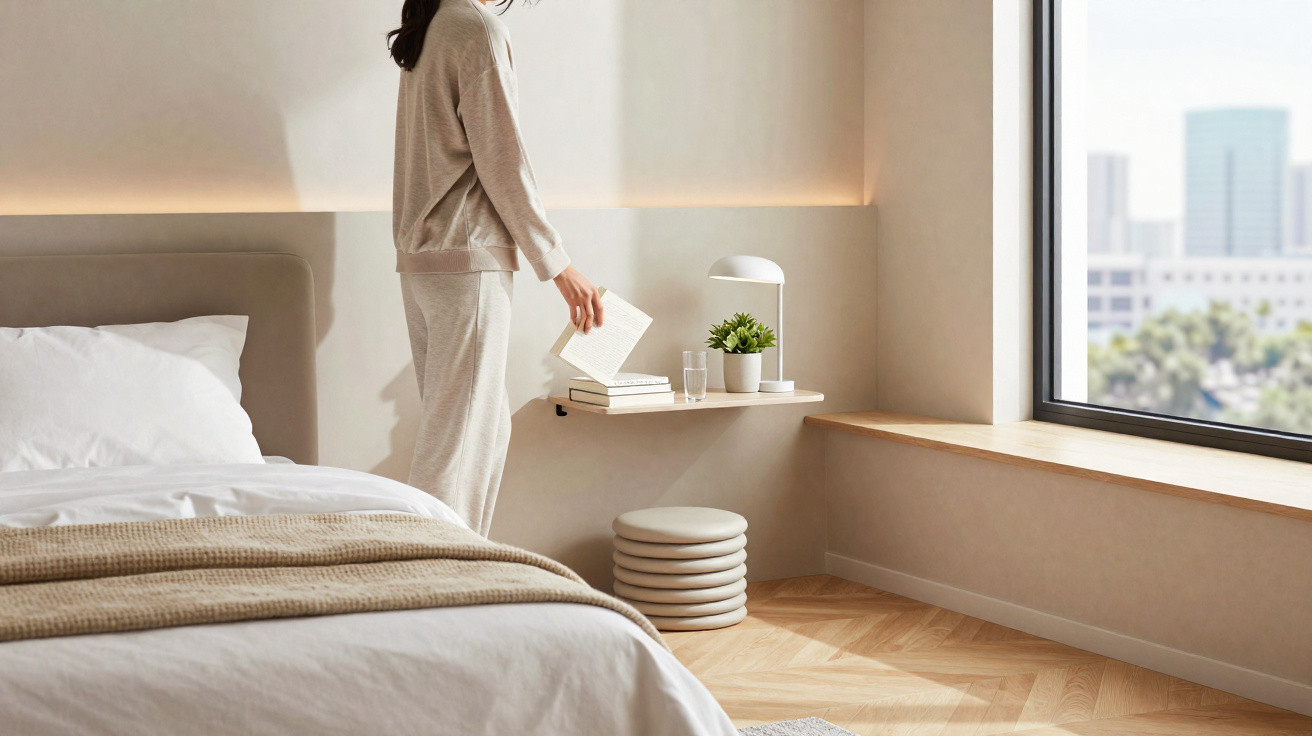
In recent years, the bedroom has evolved beyond a place solely for rest into a multifunctional, connected and well-organised room. In 2026, replacing the conventional bedside table with subtler, more adaptable solutions is appearing in residential schemes of many kinds, shaping choices that favour practicality, uncluttered aesthetics and more efficient use of the available space.
Why are bedside tables being replaced in 2026?
The key driver behind this shift is a desire for greater everyday convenience. Traditional bedside tables, with their deep drawers and bulky construction, often become storage spots for forgotten items, making organisation more difficult and allowing dust to build up.
In smaller rooms, this furniture takes up precious floor area and restricts side access around the bed. Contemporary bedrooms favour clean lines, lightweight pieces and visible surfaces, making slim shelves, freestanding tables and wall-mounted elements more appealing; these keep the floor clear and make cleaning easier.
Watch a video on the YouTube channel Decorando Meu Apê about recessed niches and suspended shelves that replace the traditional bedside table and give the bedroom a modern look:
https://www.youtube.com/watch?v=Xn72Xq6qL90
Which practical alternatives can replace a bedside table?
Today’s routines, defined by frequent use of electronic devices and fewer accumulated possessions, generally require only a quick resting place for a mobile phone, book, headphones and, at most, a glass of water. Within this context, more compact and versatile choices are emerging, suited to both spacious and compact bedrooms.
These alternatives also make it possible to experiment with heights, colours and materials, producing contemporary asymmetric arrangements. Here are several options gaining ground in recent interior projects:
- Floating shelves: wall-fixed options that have little visual impact and can be fitted at mattress height.
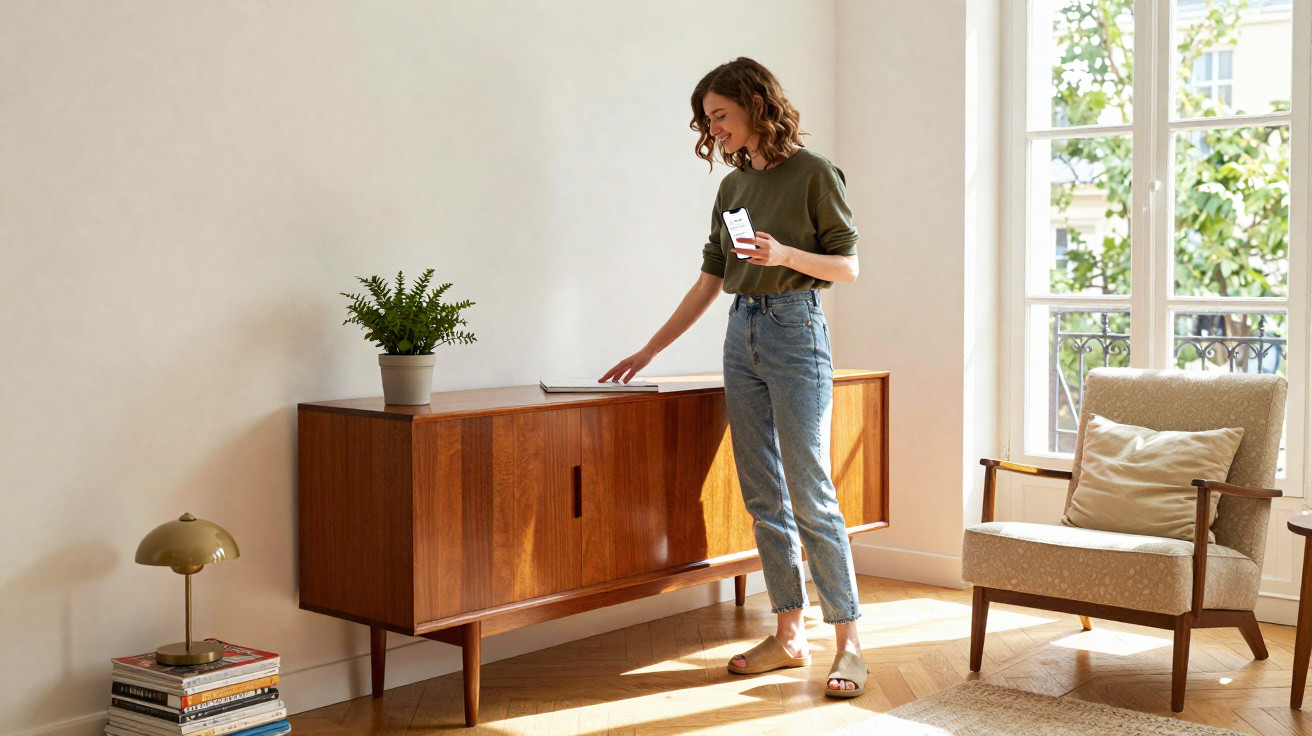
- Freestanding side tables: designs usually found in living rooms are moving into bedrooms, as they are lightweight and easy to reposition.
- Recessed niches in the panel: often used in fitted bedrooms, these act as “pockets” beside the bed.
- Trolleys with castors: allow the support surface to be moved around and can also serve as a small workstation.
- A side bench or pouffe: when paired with a tray, it becomes a useful surface while also offering a place to sit or lay clothes.
How can this trend work in small, medium and large bedrooms?
For small bedrooms, it is best to make full use of the walls with narrow shelves, lightweight niches and tables attached to the headboard, keeping the side passage clear. In many cases, one carefully positioned surface is enough for daily needs without making the room feel heavy.
In medium-sized bedrooms, solutions can be combined-for instance, a compact side table on one side and a recessed niche on the other-to create visual balance. In large suites, more distinctive pieces can take centre stage, including shallow console tables, sculptural tables and continuous panels with integrated lighting, all of which become prominent decorative features.
How should you plan bedside support intelligently?
For a bedside table replacement to work effectively, the first step is to consider how the space is used. Reviewing reading habits, electronic-device use, the need to keep medicines close by, and a preference for direct or softer lighting helps determine the most suitable type of support.
For projects with a limited budget, it can be worthwhile to repurpose an existing small table or fit a simple wall shelf. In more detailed schemes, fitted furniture and continuous headboards can combine storage, lighting and bedside support in one arrangement, reinforcing bedrooms that are lighter, more practical and suited to today’s way of sleeping, relaxing and even working in the same room.









Comments
No comments yet. Be the first to comment!
Leave a Comment