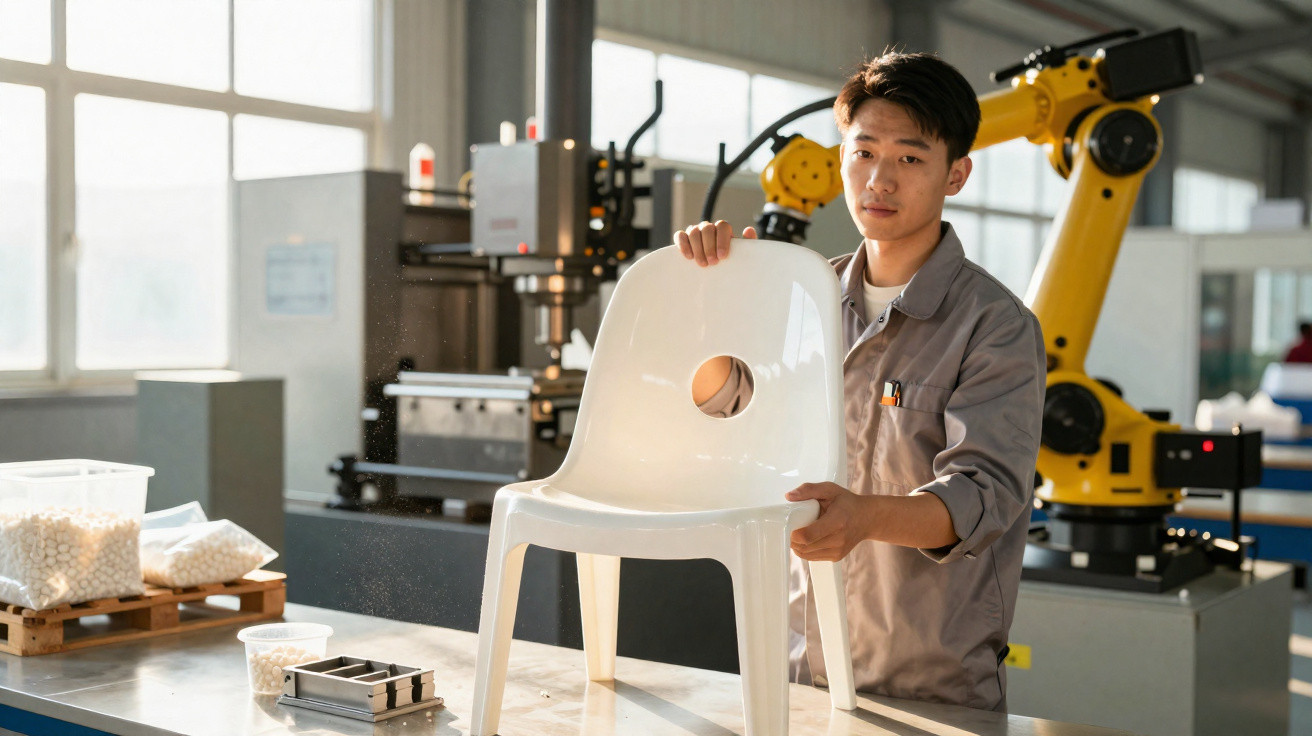
Many people use the practical plastic chair on balconies without noticing the details of its industrial design. This piece of furniture conceals specific functional features that ensure ideal durability and user safety, delivering excellent structural strength in the weather conditions of an ordinary residential setting.
Why do plastic chairs have a hole in the seat?
The small round hole located in the centre of the seat serves crucial engineering purposes. Its main function is the effective drainage of liquids, preventing rainwater from collecting on the plastic surface and keeping the furniture ready for comfortable everyday use.
As well as allowing water to drain away, this central opening makes it easier to transport the furniture in compact stacks. When chairs are stacked, the hole lets air escape freely, preventing a persistent vacuum that would make the pieces difficult to separate immediately, making everyday handling far more practical.
The ergonomic and functional benefits of this manufacturing detail include the following essential points:
- Efficient drainage: The central hole prevents unwanted rainwater or water from frequent cleaning from building up.
- Vacuum prevention: The opening allows air to escape while plastic chairs are being stacked.
- Easy transport: The space acts as a natural handle for gripping and moving the product.
- Pressure relief: It distributes the user's weight more evenly, preventing cracks in the polypropylene structure.
- Easier moulding: It simplifies the flow of molten plastic during the industrial injection process.
How does the injection process for these chairs work?
This furniture is manufactured using an advanced automated injection-moulding machine. The industrial process turns granulated polypropylene into a liquid state at high temperature, completely filling the complex metal mould designed to create the perfect shape and ensure the stability of the durable chair.
Immediately after the plastic material is injected into the cavity, an essential cooling system comes into operation. This controlled cooling rapidly hardens the polymer, enabling a robotic mechanical arm to remove the finished piece with exceptional operational precision, while maintaining a continuous and highly efficient pace.
Below, watch the explanatory video directly from the Injeção de Plásticos Polímeros YouTube channel to see how this automated manufacturing process works:
What are the structural secrets of moulded polypropylene?
Using polypropylene as the main raw material gives the finished product ideal physical properties. This modern polymer stands out for its malleability and high impact tolerance, ensuring that the seat can support heavy loads without permanent deformation or breakage during prolonged everyday use.
Polymer Engineering
Advanced Strength and Durability
Plastic injected under high pressure fills the cavities perfectly, producing a single piece without weakened joins.
Rapid cooling fixes the polymer molecules in place, providing the toughness required for safe daily use.
Even distribution of the plastic material during manufacturing prevents weak points in the chair's structure. With precise cooling integrated into the mould, the polypropylene reaches maximum stability, withstanding temperature variations without damage and maintaining ergonomic safety for the general public.
The most notable physical characteristics obtained from this high-quality raw material are:
- High mechanical flexibility under continuous weight.
- Strong thermal insulation in exposed outdoor environments.
- Superior chemical resistance to heavy-duty cleaning products.
How does industrial automation improve furniture production?
Modernising plastic-injection factories has brought state-of-the-art robots to assembly lines. These machines carry out repetitive tasks at impressive speed, ensuring that the production cycle remains continuous and free from human errors, resulting in pieces with an excellent finish and a consistent quality standard.
Automated mechanical arms remove hot products from the moulds and carry out precise finishing straight away. This uninterrupted flow along intelligent conveyors optimises factory time, enabling large-scale manufacturing of seats that fully meet the strength requirements of the Brazilian market.
The main benefits automation brings to the production line for this furniture include:
- A drastic reduction in plastic raw-material waste.
- An exponential increase in the number of pieces manufactured per hour.
- The complete elimination of faults or imperfections from manual finishing.
Why is this design detail essential in the back garden?
The central hole makes this seat ideal for kitchens, balconies and unprotected outdoor areas. Without this simple feature, water would remain stagnant, creating unwanted dirt and making the furniture unsuitable for quick use after rain, demonstrating the importance of highly functional design.
So, when you look at this everyday object in your back garden, remember that every small round opening has been meticulously planned by modern engineering. This discreet detail ensures users' everyday convenience, promotes the proper preservation of the furniture and guarantees excellent strength in the residential space.
Read also: How to use a chair to make your body firm again









Comments
No comments yet. Be the first to comment!
Leave a Comment