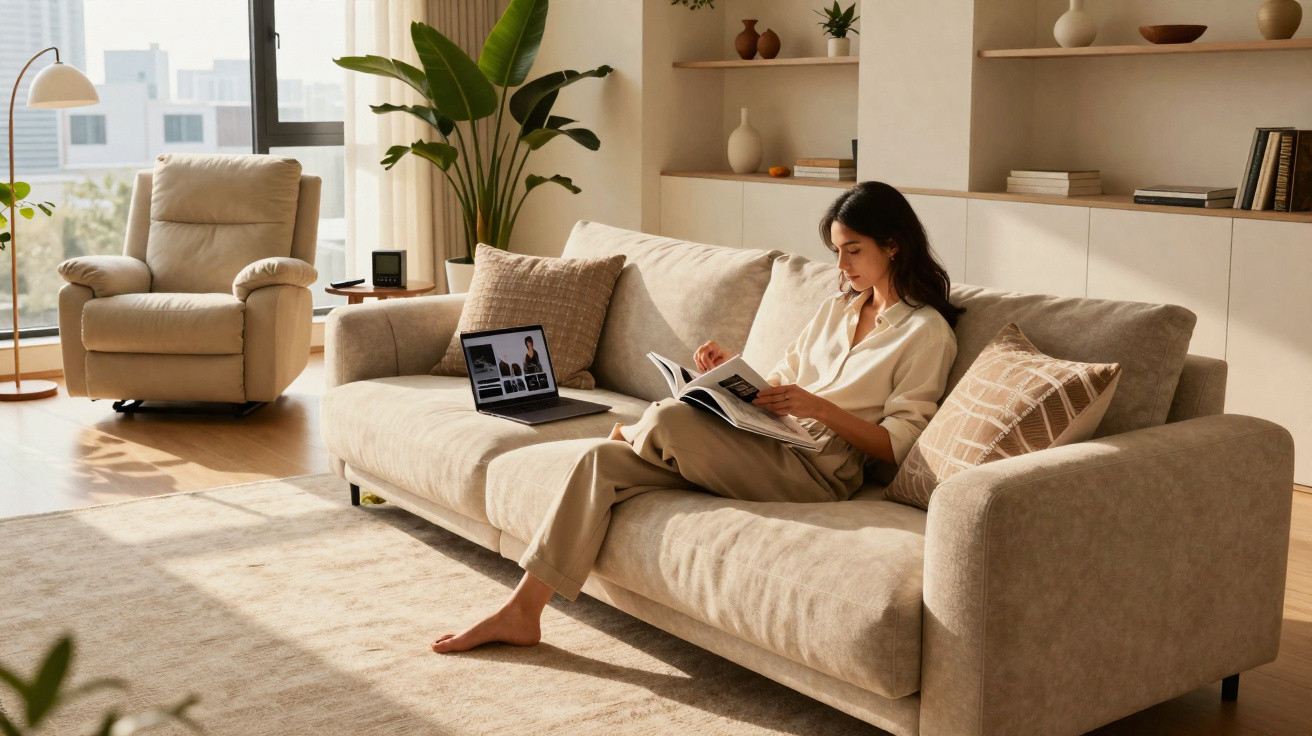
The reclining armchair in the living room was once considered almost essential in many Brazilian homes. Interior design is now moving towards lighter, multi-purpose and more integrated solutions that suit varied routines without taking up as much room. Within this shift, a new style of upholstered seating has been steadily, if quietly, replacing the traditional reclining model.
Why is the reclining armchair in the living room losing ground?
A reclining armchair in the living room was designed to provide individual relaxation, usually while facing the television. Over time, however, it has come to be regarded as a bulky item that is difficult to move and, in many cases, restricts circulation in compact or open-plan rooms.
Its opening mechanisms also require additional floor space when in use, which can be inconvenient in smaller living rooms. As more people work from home and use the same area for leisure, studying and socialising, there is growing demand for furniture that can be adapted quickly and blends more naturally with other parts of the home.
What trend is replacing the reclining armchair in the living room?
The leading alternative taking the place of the former armchair is a modular sofa with a chaise section and accompanying footstools. This combination creates a relaxing area for one or more people, allowing them to stretch out their legs, support their lower back and change position without relying on visible metal mechanisms.
Compact ergonomic armchairs are also becoming more prominent. They do not have an obvious reclining function, but offer a gently angled backrest, armrests at an appropriate height and a comfortably deep seat. To better understand this new type of seating, it is worth considering several common features:
- Clean lines and few protruding elements, making them easier to pair with other furniture.
- A raised base on wooden or metal legs, which leaves the floor visible and gives a greater impression of space.
- Firm upholstery with comfort layers, designed for prolonged use without quickly losing its shape.
- Easy-clean fabric coverings, such as synthetic linen, technical suede or faux leather.
Watch a video on the Oficina de Casa YouTube channel about choosing compact armchairs with modern ergonomic design that provide plenty of comfort without overwhelming the usable area of the living room:
How can this new trend be adapted for small and large living rooms?
In compact spaces, the bulky piece is often replaced with a two- or three-seater sofa featuring a chaise at one end. This provides a place to stretch out without introducing extra furniture, while footstools can serve as footrests or additional seating.
In larger living rooms, a main sofa combined with lightweight armchairs and footstools creates a flexible seating area. Rather than having one isolated reclining armchair, two fixed armchairs can be arranged facing one another or in an “L” shape. This creates a setting suited to conversation, reading or binge-watching series without making the television the sole focus.
How should you choose between a reclining armchair and newer seating models?
When deciding whether to keep a reclining armchair in the living room or choose more current alternatives, the first consideration should be the size of the room. In narrow living rooms, compact furniture improves circulation; in larger areas, modular pieces and footstools help create distinct activity zones and make the space more versatile throughout the day.
Lifestyle is also an important factor. People who frequently host visitors tend to benefit from having more seats available, even if none of them is an individual reclining chair. Those who spend hours watching television, on the other hand, may prefer a well-proportioned chaise and a comfortable backrest, which offer the same relaxation with a lighter look and easier maintenance over the years.














Comments
No comments yet. Be the first to comment!
Leave a Comment