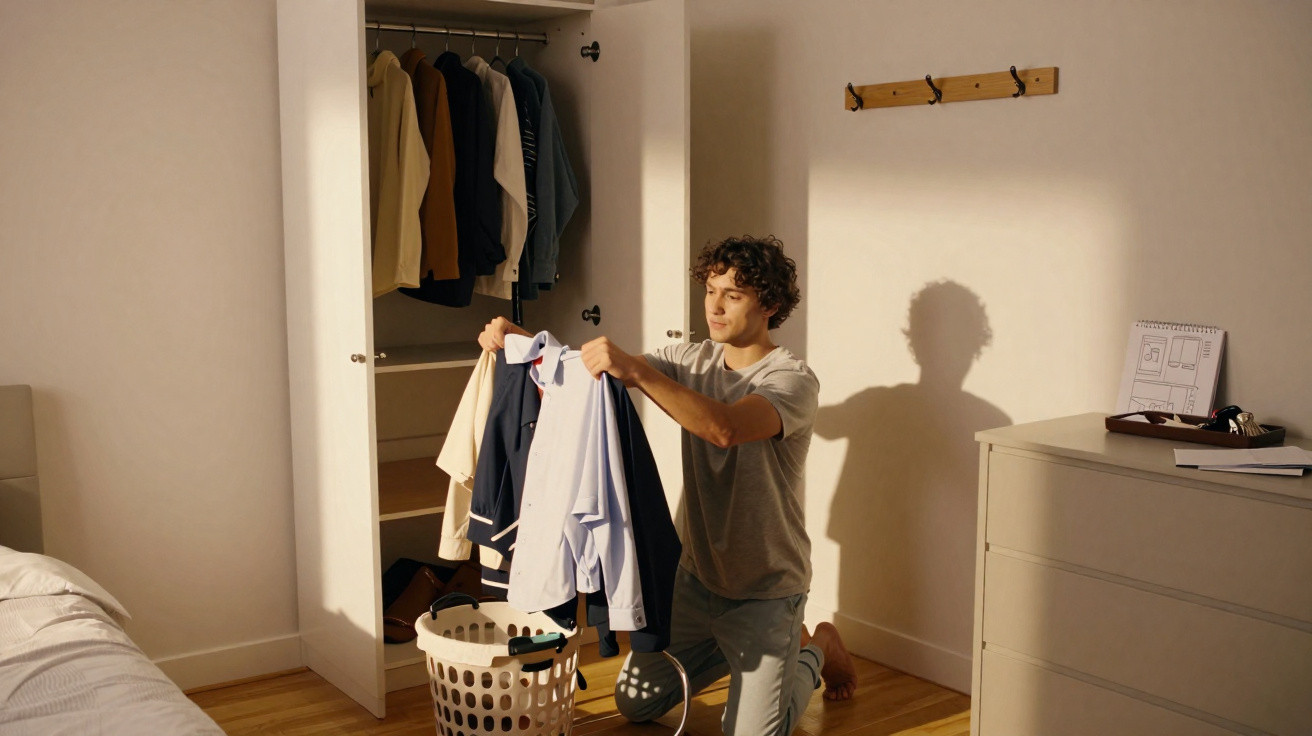
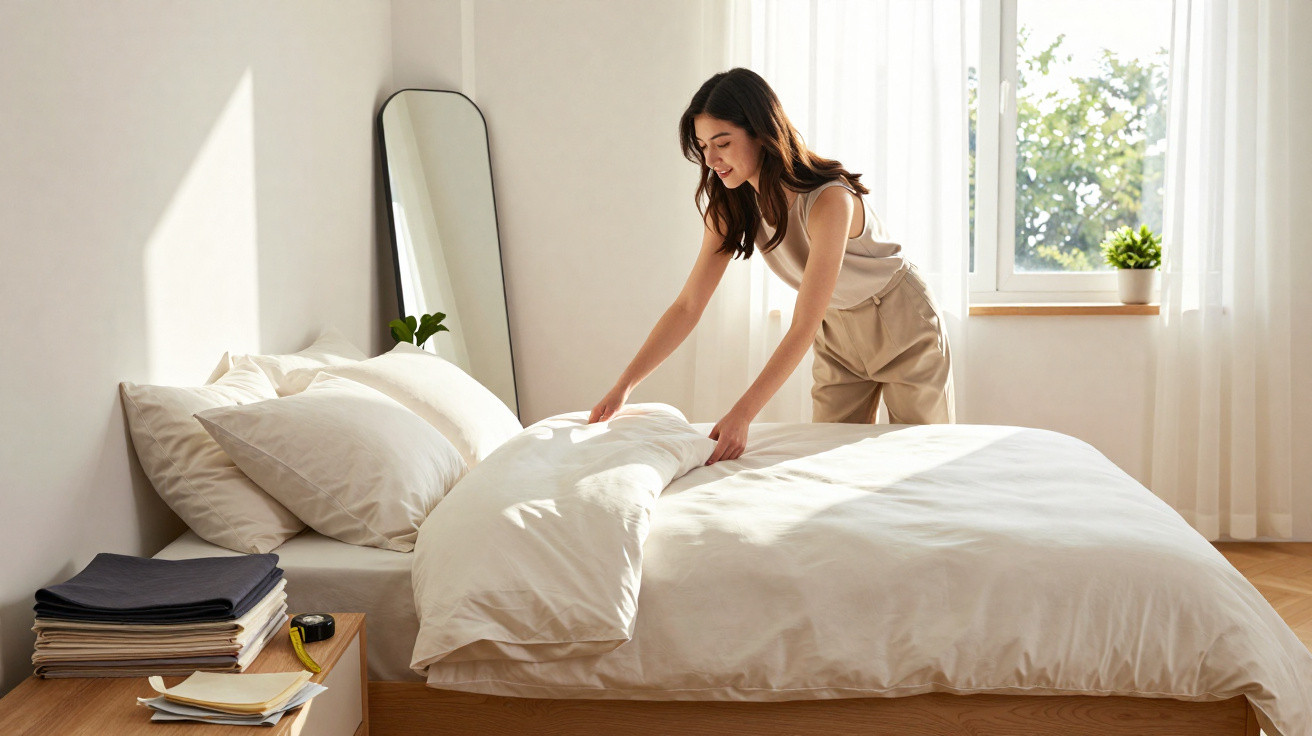
You shut the door on an almost flawless bedroom at 9 p.m. The bed is made, clothes are folded and the desk has been wiped clean. There is a faint scent of fabric conditioner and triumph in the air. Yet the following evening, you return… and it seems as though someone has spent an entire week there in just one day. Clothes are heaped on the chair. Three glasses sit on the bedside table. Random cables appear to be multiplying beside the bed.
You pause in the doorway, completely confused.
How can a room fall apart so quickly?
When a “messy room” is actually a system problem
Take a closer look at the areas of your home that never remain tidy. You will often spot a recurring pattern: the same belongings left out, the same corner overflowing, the same “temporary” heap that has somehow stayed put for six months.
This is not about laziness. The room is quietly telling you: “This setup doesn’t work for how you live.”
A space that is easy to reset usually gives every item an obvious home that takes little effort to use. A room that repeatedly descends into disorder is working against your actual routines. Perhaps you expect it to function like a showroom when, in reality, it serves as a laundry area, home office, snack bar and therapy space all at once.
Consider the familiar bedroom chair. You know the one: officially, it is a chair, but you have not seen its seat since last spring. Clean clothes are dropped there “just for now”, gym kit is left there to dry, and half-worn jeans wait there because “they’re not dirty enough for the hamper.”
You might fold every item perfectly on Sunday and feel like a completely new person, only to find the chair covered again by Wednesday. Hallway consoles behave the same way, collecting keys, post, masks and receipts. In children’s bedrooms, every newly cleared floor can become Lego territory again before breakfast.
That repetition is not accidental. Your everyday routine is revealing exactly where the room’s layout fails to reflect reality. Reality wins every time.
Think about how you genuinely move through your day. You arrive home exhausted, with your phone in one hand and a bag in the other, perhaps also carrying a takeaway or laptop. Your mind naturally chooses the easiest route. When putting something away means opening three doors, pulling out a box or crossing the room, it will end up on the nearest available surface.
The room therefore keeps “getting messy” not because you do not care, but because there is too much friction. Storage that is too deep, distant, high up or concealed creates visual clutter. Spaces that stay tidy are rarely about willpower. They’re about design that forgives your real-life energy levels.
Small, sneaky shifts that stop the endless reset cycle
The spaces that genuinely improve are often those where the definition of “away” becomes easier to achieve. The answer is not greater discipline, but less effort.
For the chair-that-is-really-a-wardrobe, place a shallow open basket or low rail beside it, reserved solely for clothes that have been worn but are not dirty. No folding and no fiddly hanger hooks: one motion, then drop and go.
Give the area near your door, or “landing zone”, a clear purpose. Use a tray for keys and coins, and a vertical post holder divided into “to pay”, “to read” and “to toss”. Add one hook for the bag you use every day. You are not trying to become an ultra-organised person; you are simply shifting the natural mess 30 cm to the left, into somewhere that holds it.
The main pitfall is striving for magazine-standard perfection in a room used like a railway station. You declutter intensely, purchase matching boxes and promise yourself that this time will be different. Then real life intervenes: a late night, a stressful week, an ill child or a deadline. Before long, the beautifully folded arrangement feels too delicate to use.
Let us be honest: nobody really does this every single day.
Rooms that remain reasonably orderly tend to rely on “good enough” routines. Have one laundry basket for each person, even if it is not attractive. Allow one drawer to become the unruly junk drawer so that the rest of the desk has space to breathe. Do a five-minute reset at the same point every evening, with the aim not of perfection but of ensuring there is “nothing on the floor that can trip me.”
Sometimes the cleanest-looking homes are not the ones with fewer things, but the ones where every messy habit has been quietly given a designated spot.
Create “drop zones”
Keep one tray for small objects by the door, one basket for wandering items in the living room and one box for miscellaneous cables. There is no shame involved, only containment.Use open storage where you struggle most
Choose a shelf rather than a closed cupboard, hooks rather than hangers, and a visible laundry basket rather than a decorative chair. Cut down the steps between “in my hand” and “put away.”Design for your actual life, not your fantasy life
If you invariably work from the sofa, equip that place with a side table, lamp and small basket for notebooks. Stop telling yourself that you will use the desk “from tomorrow.”Limit surface parking spaces
Every flat area attracts clutter. Deliberately leave some surfaces clear. One decorative item on each surface can act as a subtle “no pile here” notice.Make tidying part of transitions, not a separate event
Spend two minutes clearing the bedside table after brushing your teeth. Put on one song while dinner simmers and clear the worktop. Create tiny loops attached to routines you already have.
The rooms that “resist” are often telling you something
Some rooms refuse to stay tidy because they are carrying too many unnamed functions. A bedroom that doubles as an office, dressing room, storage unit and panic room for unfolded laundry will always push back.
At times, the real question is not “Why am I so messy?” but “What am I asking this room to hold for me?” The stack of books beside the bed may reflect a wish to read more rather than clutter. The craft table you cannot ever clear may in fact be your only creative corner in a life planned down to the minute.
Transforming a room that constantly collapses is not only about getting rid of possessions. It can involve accepting what the room is truly for and releasing the fantasy version you believed it ought to be. That can be a quietly tender process, almost like acknowledging the season of life you are actually living in.
| Key point | Detail | Value for the reader |
|---|---|---|
| Design beats willpower | Rooms stay clean when storage matches real habits and minimizes effort | Reduces guilt and focuses on practical, sustainable fixes |
| “Drop zones” tame daily chaos | Simple trays, baskets, and hooks catch inevitable clutter | Makes mess feel temporary and manageable instead of overwhelming |
| Rooms reveal your real life | Persistent mess often points to overloaded roles or unrealistic expectations | Invites more compassionate, realistic decisions about space and stuff |







Comments
No comments yet. Be the first to comment!
Leave a Comment