
A notification appears on your phone at 9.07 a.m.: “5 secrets to a spotless home… every single day.” You look around the kitchen: a coffee mug with a stain at its base, crumbs beneath the toaster, and a sock in the hallway that nobody claims. You are ready for work, yet the bathroom mirror still bears toothpaste splatters from three days ago.
You exhale, save the article “for later”, and feel that familiar, quiet pang of guilt.
Meanwhile, life carries on: children hunting for shoes, emails accumulating, and a cat discreetly being sick behind the sofa. Still, pictures of shining worktops and carefully folded throws keep appearing, suggesting that this level of perfection is ordinary.
One question keeps lingering.
Why the spotless home ideal is exhausting you
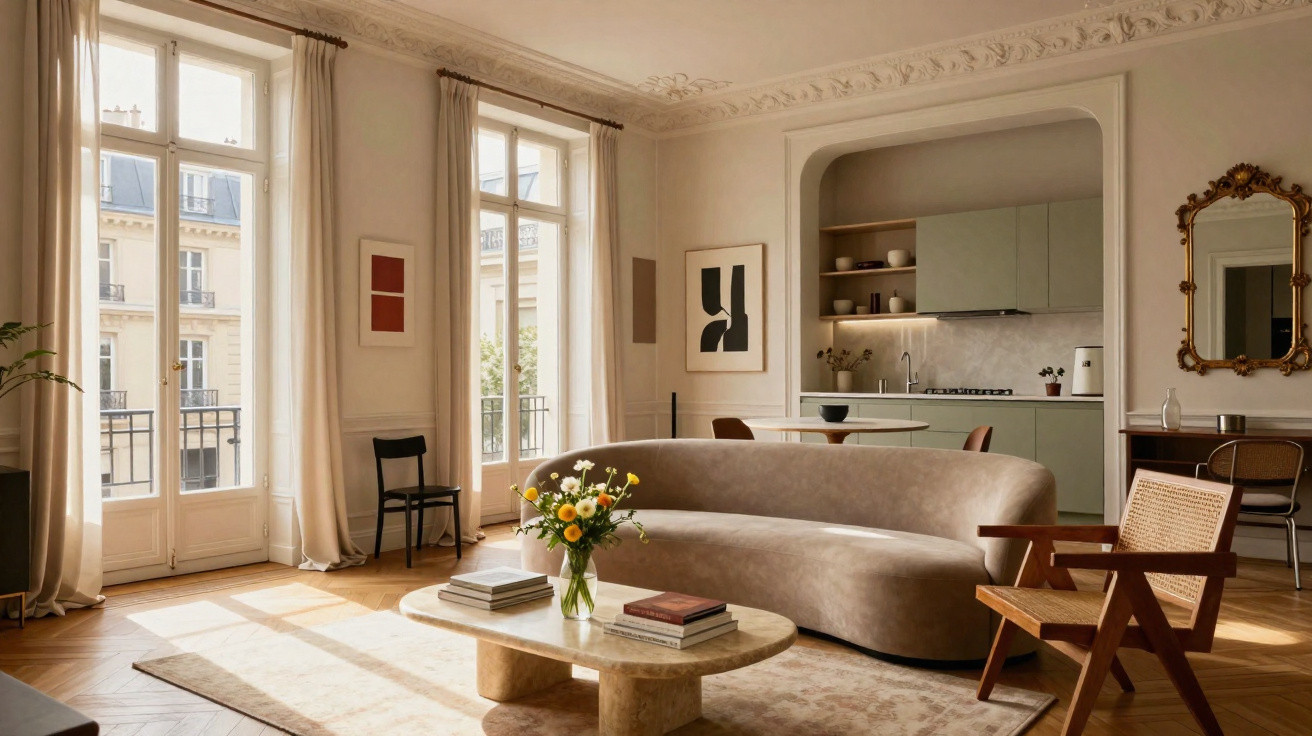
Browse any social media feed and the same image appears again and again: a white sofa, an immaculate kitchen, plants that never wilt, and no post cluttering the worktop. The caption calls it “just a quick tidy” - that legendary 10-minute routine supposedly capable of removing every sign of everyday life.
What remains unseen is the clutter shifted outside the camera frame, or the hour someone spent cleaning before taking the photo. All you see is a benchmark you believe you are not meeting. That unspoken pressure is far from harmless: it seeps into the way you assess your day, your value and your home.
One reader told me about a Sunday when she spent four hours scrubbing every surface in her small flat. By the time she finally sat down, drained, her partner came in with shopping and placed a bag on the newly cleared table. Within two minutes, onion skins and receipts were scattered everywhere.
She lost her temper. It was not the untidiness itself, but the fact that her effort had been devoted to something real life could undo instantly. The following day, an advert appeared on her phone: “How I keep my home spotless 24/7 with two kids.”
She laughed, and then cried a little. Rather than feeling inspiring, the advert felt like an accusation.
There is a straightforward reason the tale of the “effortless spotless” home feels untrue: homes are lived in, not styled as displays. Dust settles on floors, dishes build up, post arrives and children find fresh ways to spread their things around. A lived-in home is always moving and changing.
Yet we have taken in a commercial fantasy designed to sell candles, baskets and cleaning products. A constantly pristine home is less a lifestyle and more a staged set. Maintaining that set every day requires more time, money and energy than most people possess.
Let us be honest: no one truly lives like this every single day.
What to do instead of chasing the spotless illusion
One useful change can transform the way you approach your home: replace “spotless” with “functional and calm enough”. This means identifying the few pressure points that genuinely affect your day and treating those as priorities.
Perhaps it is leaving the kitchen sink clear at night, making the morning feel easier. Or it may be a quick five-minute living-room reset before bed, so you are not stepping over toys at 6 a.m. These small rituals do not deliver perfection; they give you room to breathe.
Pick three non-negotiables, and allow everything else to become “when I can, not every day”. That is a home rather than a showroom.
The “all-or-nothing clean” is a frequent trap. You see everything that needs doing, become overwhelmed, and either clean for hours or avoid the task altogether. Both options end in frustration. Your mind compares the space with the spotless ideal in your head and convinces you there is no point beginning unless you can achieve it.
Instead, choose a single area no larger than a yoga mat. Focus only on that corner. Tidy it for ten minutes and then stop, even when other jobs are still irritating you. Pick a different place tomorrow. Giving yourself permission to leave things unfinished can feel unexpectedly rebellious, but that is often where sanity lies.
The clutter reduces gradually. Your self-criticism fades more quickly.
The biggest lie in all those glossy posts is that cleanliness is purely a question of willpower. Everyday life is more complicated: chronic tiredness, late shifts, mental load, small flats, children with sensory needs, or simply wanting to read a book rather than polish a tap all matter.
“My house is clean enough to be healthy and messy enough to be happy,” an older neighbor told me once, wiping her hands on a dish towel while toys rolled under her table.
Use this simple list to replace the old spotless ideal with a kinder one:
- Define what “good enough” means to you on an ordinary day.
- Keep all daily jobs to 20–30 minutes or less.
- Schedule more intensive cleaning weekly rather than every day.
- Discuss and share tasks openly, including with children and untidy partners.
- Keep one small untidy area where perfection is not allowed.
Learning to live with traces of life
The dream of an always-immaculate home suggests that every sign of life is something to remove. A mug on the coffee table, books stacked beside the bed, a jacket draped over a chair. Consider how differently those objects feel when you view them as evidence that your home is used, loved and lived in.
Once you stop apologising for every shoe in the hallway, your interactions shift. Friends become more at ease. Children recognise that they are not a permanent inconvenience. You may also realise how much mental space returns when cleaning no longer feels like a daily try-out before an unseen panel of judges.
A home can be cared for without being perfect. Very often, that balance is precisely what makes it feel like your own.
| Key point | Detail | Value for the reader |
|---|---|---|
| Redefine “clean enough” | Concentrate on a small number of daily non-negotiables rather than complete spotlessness | Lowers guilt and makes routines achievable |
| Break the all-or-nothing cycle | Clean small areas in short bursts | Eases overwhelm and helps you get started |
| Accept visible signs of life | Treat mess as movement rather than a moral failing | Strengthens self-esteem and your relationship with your home |






Comments
No comments yet. Be the first to comment!
Leave a Comment