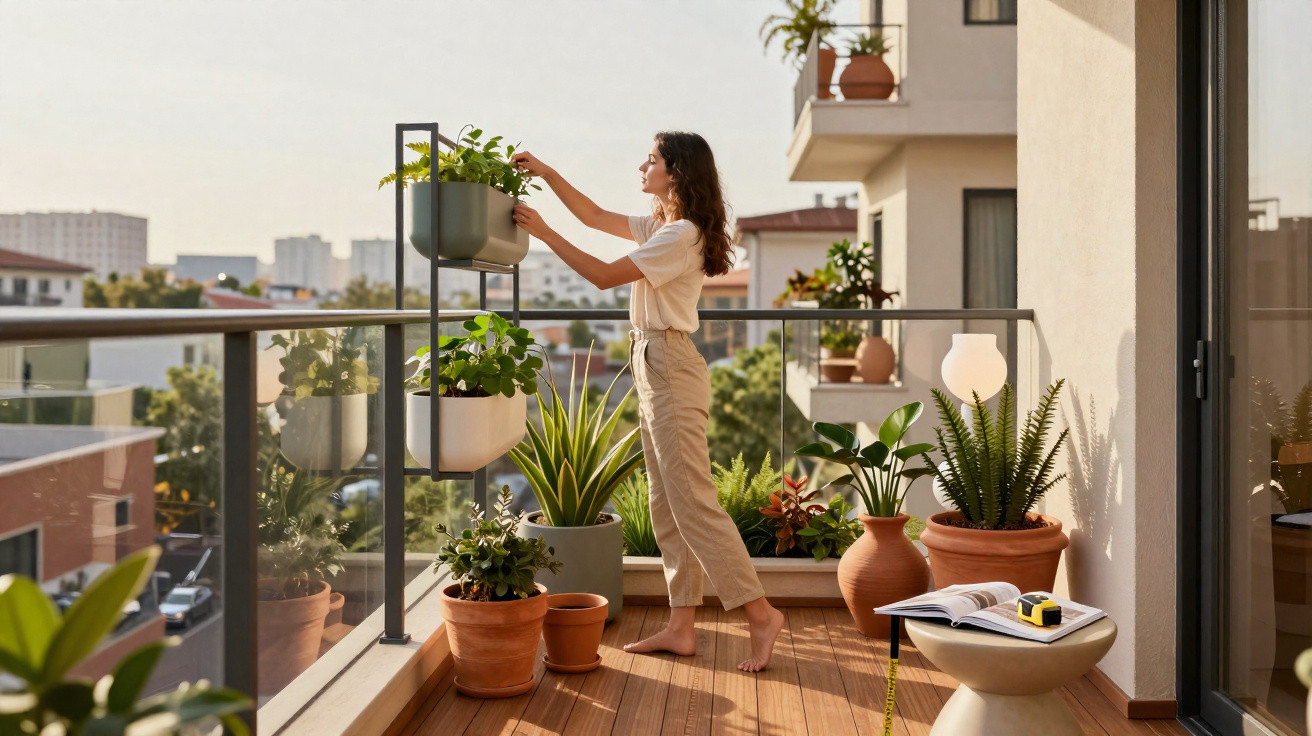
Anyone still placing basic flower pots along their balcony railing in 2026 is behind the style curve. Outdoor spaces have long been treated as a second living room, and they are now designed accordingly: with a plan, with style and with an entirely new way of displaying greenery.
From terracotta pot to design feature: what is changing on balconies
The old formula was straightforward: place a few pots against the wall, perhaps add a planter to the railing, and the “green” balcony was complete. It looked pleasant, but it used up valuable room and could quickly appear cluttered. The focus has now shifted to designing the space itself. Plants are no longer meant to sit wherever there is room; they are intended to shape an outdoor room.
This is precisely where the new trend for 2026 begins: conventional flower pots are gradually disappearing from balcony floors. In their place come slim, raised plant modules that look-and feel-like pieces of furniture.
The new balcony formula for 2026: raise the plants, keep the floor clear and structure the space clearly.
Plants float above the floor
At the heart of this development is a simple idea: plants no longer sit directly on the ground, but in elongated planters supported by stands or legs. These frames are often made from black metal or slender wooden structures. They lift the greenery visually while leaving the floor largely unobstructed.
This single adjustment has a surprisingly strong effect. The area feels more open, contemporary and noticeably tidier. Rather than dozens of small pots, there is a coherent overall look: long lines, repeated forms and calm structures. The plants become a focal point without getting in the way.
- Less clutter: One large, elongated planter box can often replace ten separate pots.
- More open space: The floor beneath the stands remains clear, both visually and practically.
- More design: Metal frames and wooden legs look like part of the furnishings rather than garden equipment.
Many people say that raised planters suddenly make their balcony appear larger. This is because the eye reads the floor as one continuous surface, while the plants are perceived more as a backdrop.
Using height to create a carefully planned balcony
A second key element of the trend is the use of different heights. Not every planter box is placed at the same level. Some stands are low, while others reach almost to waist height; hanging plants or a small shelf may be added between them.
This creates vertical lines and sightlines, making an otherwise flat balcony more interesting. The result feels more like a well-furnished living room than a storage spot filled with greenery.
Plants as natural room dividers
Plant modules at different heights can divide an outdoor area into zones without the need for solid walls. A typical layout for popular city balconies in 2026 includes:
- Dining area: Slim, medium-height plant modules along the railing frame the table.
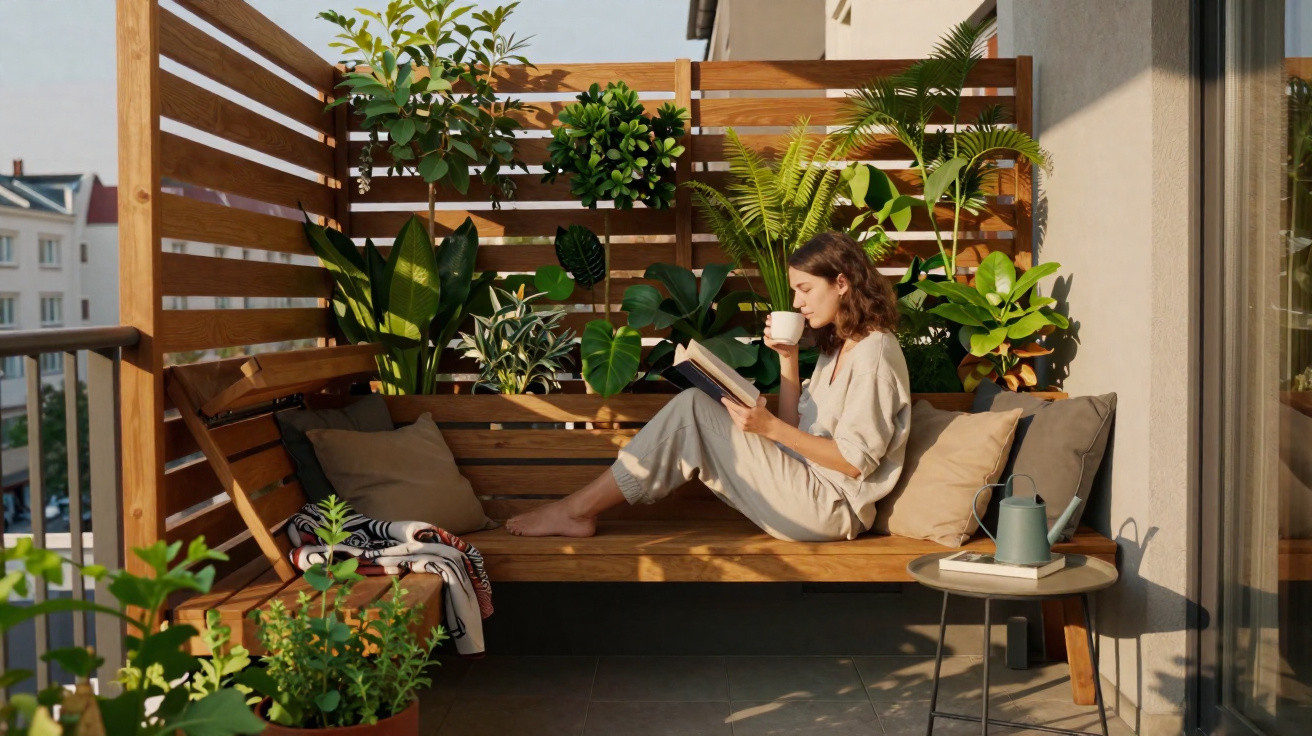
- Lounge corner: Taller containers behind a sofa or armchair provide privacy and a more sheltered feel.
- Mini workspace: A narrow, taller plant shelf subtly separates a compact work area.
Plants therefore take on two functions: they do not merely decorate the balcony, but also define the space. Smaller balconies benefit especially, as they gain more structure without extra furniture or screens taking up room.
Metal or wood: which look suits which style?
Two materials dominate this development: cool metal and warm wood. Each creates a distinct atmosphere, and the two also work well together.
| Material | Effect | Works particularly well with |
|---|---|---|
| Black metal | clean, pared-back, urban | loft style, industrial interiors, modern city flats |
| Wood | cosy, natural, warm | Scandi style, boho, country house style, family balconies |
| Mix of metal and wood | balanced, premium | anyone who likes design but does not want a cold look |
Black metal frames bring to mind the modern shelving systems used indoors. Those who already have this look in their living room can simply carry it through to the balcony. Wooden frames, on the other hand, can make even five square metres of concrete feel like a small garden. Many manufacturers now use weather-treated wood that does not turn grey immediately.
The balcony as a real room: why the trend is catching on
This current shift has not appeared from nowhere. Since the pandemic, significantly more people have used their balcony or terrace every day-for work, reading and meeting friends. The “smoker’s balcony” has become a living space.
Anyone who uses a space regularly wants to design it, not only for practicality but also so that it looks cohesive. In this setting, the classic flower pot can seem almost out of place: functional, but random and not integrated. Raised plant modules, by contrast, are genuine design features.
Plants are moving in 2026 from the garden corner into the interior design category-simply for outdoor spaces.
Manufacturers are also responding to demand for modular solutions. Many systems can be expanded with an additional module alongside, a taller frame behind or an integrated trellis for climbing plants. If you move home, you can take the whole arrangement with you and adapt it to the new space.
How to move away from flower pots
There is no need to throw out old containers immediately. Making the change gradually keeps costs down and helps you find your own style. Many home experts recommend this practical approach for 2026:
- Buy one larger raised planter and position it in a central spot.
- Replant some existing greenery, choosing only healthy plants that suit the new container.
- Remove or give away unnecessary individual pots to create a calmer-looking balcony.
- After a few weeks, assess where a second or third module would be useful.
A clear visual direction is important: it is better to choose a small number of well-considered elements than to create another collection of everything that has accumulated. Repeating the colours of frames, cushions, an outdoor rug and lighting creates a harmonious overall look.
Which plants are particularly suited to the trend
Not every variety looks equally effective in raised containers. Combinations of trailing plants, compact shrubs and grasses are especially popular. Together, they create a lively display without becoming too bulky.
Typical combinations on trend-led balconies in 2026 include:
- delicate trailing plants at the front edge of the planter boxes
- grasses and small shrubs in the middle to add structure
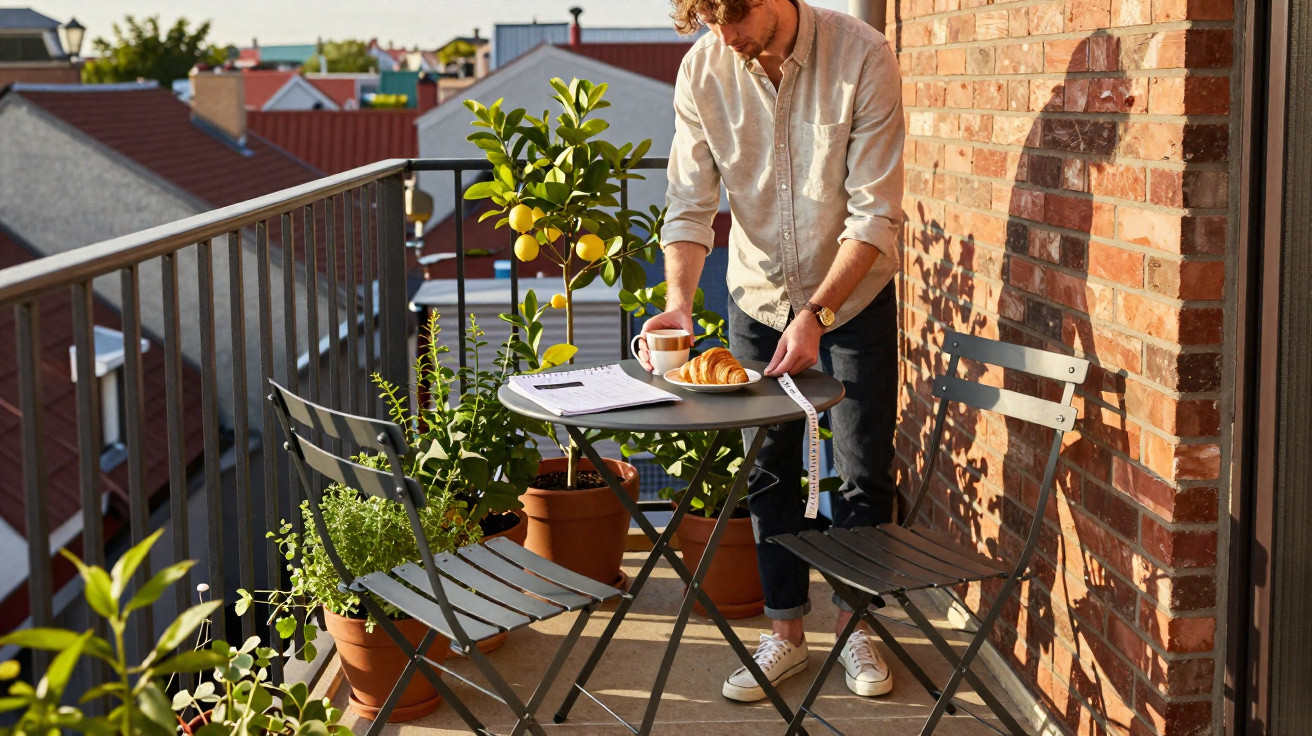
- one or two focal points, such as a small olive tree or a standard lemon tree, positioned at the back
Those with limited time should opt for hardy varieties with similar watering requirements. This means the raised containers do not need constant attention. On south-facing balconies in particular, an irrigation solution that can be integrated discreetly is worthwhile.
Opportunities and risks: what to consider before redesigning
Raised planting systems bring plenty of benefits, but they do not solve every issue automatically. Frames need to be stable, especially on exposed, windy balconies. Narrow legs may look delicate, but they still require a secure footing. Weight should also be checked: the extra compost in larger containers can matter on older balconies.
On the positive side, the trend encourages many people to care for their outdoor spaces more thoughtfully. Those investing in well-designed modules are less likely to fill every corner, and more likely to plan. This often leads, almost incidentally, to less plastic, fewer disposable products and more long-lasting solutions.
It will be interesting to see how far this style spreads into other areas. Some interior designers are already using similarly constructed plant modules in entrance halls and home offices to divide rooms. The boundary between indoors and outdoors is becoming blurred, while the balcony is finally gaining the status of a fully fledged room with its own character.


Comments
No comments yet. Be the first to comment!
Leave a Comment