We spend time in offices, on the sofa and working from home, yet rarely notice how polluted the air in enclosed spaces can be. Building materials, furniture, cleaning products and electronic equipment release gases and fine particles that can worsen headaches, dry skin and breathing difficulties. Researchers and gardeners have long pointed to a straightforward measure: placing particular houseplants strategically in the right locations.
Invisible indoor pollutants: why a plant can do more than an air freshener
Indoor air in many homes is considerably more polluted than the air outdoors. Gaseous pollutants, including formaldehyde, benzene, ammonia and solvents, can come from:
- chipboard, varnishes and carpet adhesives
- cigarette smoke and old paint
- kitchen and bathroom cleaning products
- printers, photocopiers and markers in the office
The body may respond with irritated mucous membranes, headaches, tired eyes and, in some cases, allergy-like symptoms. This is where certain houseplants can help: they absorb pollutants through their leaves and roots, then break down some of them through their metabolism.
Carefully chosen houseplants can reduce odours, trap airborne pollutants, raise humidity and even shield against electromagnetic smog – all without technology.
The ideal plant for bad vibrations and odours
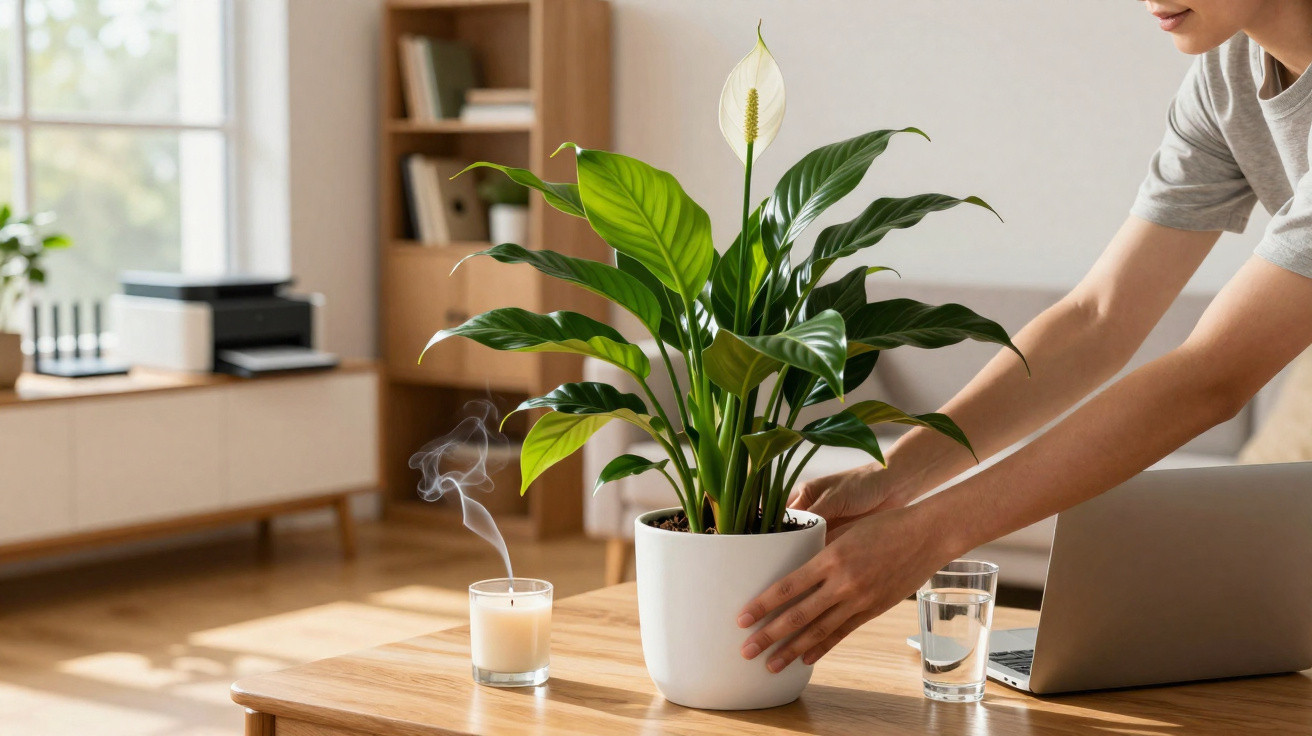
One plant appears in almost every recommendation for polluted rooms, unpleasant emissions and interference fields: Spathiphyllum, more commonly known in the UK as the peace lily.
Why the peace lily is considered an all-rounder
The peace lily brings together several benefits in one pot:
- Pollutant filter: Studies suggest it can bind various volatile substances released by paint, varnish and furniture.
- Odour reducer: In stuffy rooms or spaces with mild smells, the plant acts as a subtle, constant filter.
- Humidity regulator: It releases water into the air through its leaves, helping to counter dry central-heating air.
- Mood enhancer: Its white flowers and rich green foliage create a visually calming effect and may promote psychological balance.
Many people find that a room containing a large, healthy peace lily feels “fresher”, even when no air freshener is being used.
The best position: where a peace lily works most effectively
A peace lily is sensitive to its placement, and positioning it correctly can noticeably strengthen its positive effect:
- In the living room: Keep it close to the sofa or television, but not immediately beside a radiator. It can then interact with air currents in an area where people spend long periods.
- In a hallway or entrance area: Where smells from shoes or the kitchen arrive, it can catch much of them before the air spreads through the rest of the home.
- In the home office: Placed beside the desk, within reach of a printer or computer, it can make emissions less noticeable and create a tangibly more pleasant working atmosphere.
- In the bedroom: Some experts recommend a larger specimen on a chest of drawers or by a window, set a little away from the bed, to improve stuffy air.
A bright position away from harsh midday sun, with a consistent room temperature, is ideal – this keeps the peace lily in “filter mode” continuously.
Houseplants that target common indoor problems
For smoke and solvents: hardy living-room favourites
In places where people smoke regularly or where old carpets and adhesives are releasing fumes, specialists suggest a small “green army”:
- Ivy: Considered very resilient and frequently cited as useful against substances found in tobacco smoke.
- Snake plant (Sansevieria): Its upright, thick leaves make it exceptionally easy to care for, particularly for people without green fingers.
- Dragon tree (Dracaena): Popular in offices and living rooms, it is often described as a classic choice for benzene and similar substances.
A combination of these species can be particularly worthwhile in open-plan living and dining areas to improve air quality considerably.
Polluting furniture: catching fumes from cupboards and shelving
New cupboards, chipboard shelving and inexpensive wardrobes may release substances into the air for months. Two plants are particularly often recommended here:
- Kentia palm: Large, sturdy and with extensive leaf coverage, making it well suited to living rooms and bedrooms.
- Weeping fig (Ficus benjamina): A familiar office plant that appears in many studies as an air-improving species.
Place these plants near new furniture, while keeping them out of draughts. Together with daily burst ventilation, they remove a large proportion of the fumes from the room.
Central-heating air and dry mucous membranes: moisture from a plant pot
Anyone waking in winter with dry eyes or a scratchy throat may benefit from plants with a high rate of transpiration:
- Dieffenbachia: Its large, patterned leaves release plenty of moisture.
- Gerbera: Known as a cut flower, it can also work as a humidifier when grown in a pot.
- Boston fern: A genuine moisture powerhouse, ideal for a living room or bathroom.
Plants with large, soft leaves are especially helpful for raising humidity and easing irritation.
Working in cleaner air: plants for office emissions and electromagnetic radiation
What helps with stale office air and printer odours?
Printers, photocopiers and markers release tiny quantities of potentially problematic substances that can affect many people over time. The following are most often suggested for these office pollutants:
- Red philodendron: Tolerates dry office air well and absorbs a range of gases through its large leaves.
- Devil’s ivy (Pothos): Grows quickly, trails over shelving and copes well even in low light.
Anyone with a laser printer in their study should place at least one of these species beside it. Many people report fewer headaches and a “lighter” feeling in the room.
Protection from radiation at the desk: the small cactus trick
Electronic devices create magnetic fields, which not everyone tolerates equally well. A desk classic has become established for this purpose: the cactus.
It needs very little water, thrives in dry air and can sit right beside a monitor or laptop without getting in the way. Many people are convinced that a cactus next to the screen noticeably calms the atmosphere at work – this is only partly supported by science, but it has a psychological effect in any case.
Broad-acting species: when one plant can do a little of everything
Some species address several problems at once. The ones mentioned most frequently are:
- Peace lily (Spathiphyllum): Filters several pollutants, increases humidity and softens odours.
- Umbrella plant (Schefflera): A vigorous, bushy plant that also looks good in corners and can remove a broad range of substances from the air.
| Plant | Ideal for | Typical location |
|---|---|---|
| Peace lily | Odours, dry air, indoor pollutants | Living room, hallway, bedroom |
| Schefflera | General air cleaning, decoration | Living room, office |
| Kentia palm | Fumes from furniture | Living room and bedroom |
| Cactus | Electromagnetic smog at the desk | Office, home office |
Care mistakes, risks and practical tips
For plants to provide their benefits, they need to stay healthy. Two important points are often overlooked:
- Dust on the leaves: This prevents gas exchange. Wipe leaves gently once a month with a slightly damp cloth.
- Waterlogging: Many houseplants tolerate dryness better than soil that remains constantly wet. Pots need a drainage hole.
Some varieties, including dieffenbachia and peace lilies, are mildly toxic if pets or young children chew them. In households with cats, it is advisable to keep toxic species out of reach or choose harmless plants instead.
The combined effect is particularly interesting: a peace lily in the hallway, a cactus by the computer, a fern in the living room and a Kentia palm in the bedroom – just a few well-selected pots can noticeably alter the indoor climate. Combined with regular ventilation, mild cleaning products and avoiding scented candles everywhere, these choices gradually create a home in which the head, lungs and nerves can visibly relax.















Comments
No comments yet. Be the first to comment!
Leave a Comment