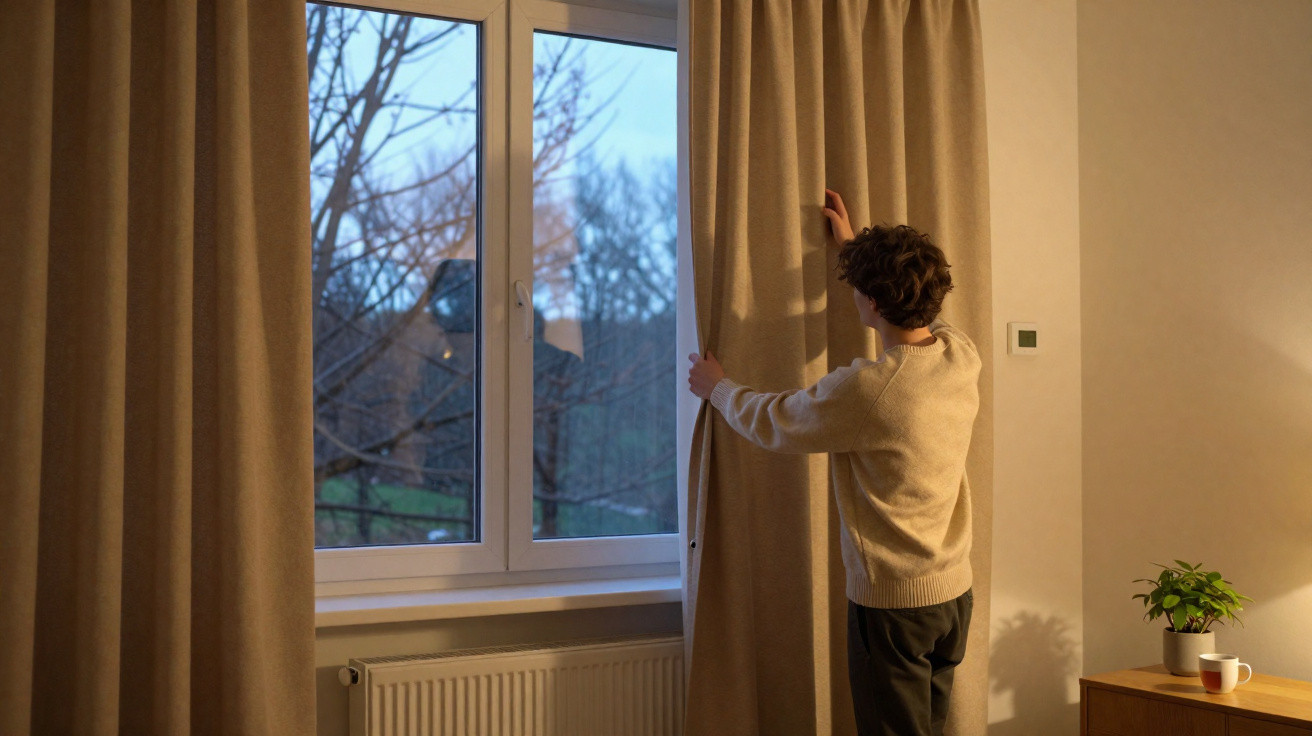
When March brings longer days, it is not only the light that changes: energy demand shifts in many homes too. It may still look bright outside, yet indoor spaces can cool down surprisingly fast. A British money-saving tip is currently gaining attention: consistently closing your curtains at a particular time can noticeably steady the room temperature and reduce heating costs – without any technical upgrade.
Why spring can become a heating trap
The change from winter to spring can be deceptive. Sunshine during the day encourages people to turn down their radiators or switch them off altogether. Once the sun sets, however, conditions quickly change: outdoor temperatures drop, walls cool, and the living room suddenly feels colder than expected.
Many people respond automatically by turning the heating back up, adjusting the thermostat or perhaps switching on an extra fan heater. That costs money, particularly when energy prices remain a persistent concern. At the same time, many households allow the free warmth collected through their windows during the day to escape.
“Anyone who keeps the warmth of the afternoon sun in the room needs considerably less additional heating in the evening.”
This is where the tip comes in: the aim is to trap heat indoors before it can escape through windows and poorly insulated surfaces.
Why 7.45 pm is crucial for closing curtains
From mid-March, the daily rhythm gradually shifts later. The sun stays up for longer, while incoming daylight warms living spaces more effectively. In many areas, sunset is then around 7.45 pm – almost exactly when the effect begins to reverse.
Until then, the sun continues to provide free warmth. Soon afterwards, windows become a cold bridge: glass surfaces release energy outdoors, and the air close to them becomes noticeably cooler. Closing the curtains at this point helps prevent that heat loss.
“From around 7.45 pm, it is worth closing the curtains – from then on, heat loss outweighs heat gain.”
In practical terms, keep everything open during the day and close it firmly in the evening – not simply at some point before bed, but deliberately in this period after sunset.
How curtains actually retain warmth
Curtains act as an additional flexible insulation layer in front of the window. They reduce draughts, slow the cooling of the window surface and create a cushion of air between the fabric and the glass.
- Curtains open during the day: Sunlight enters and warms furniture, floors and walls.
- Curtains closed in the evening: Stored warmth stays in the room for longer, so temperatures fall more slowly.
- Less cold radiation: The glass surface radiates less “cold” back into the living area.
Measurements from various studies show that rooms with thick or specially insulating curtains are often one to two degrees warmer than comparable rooms without these textiles. One to two degrees may sound minor, but it makes a significant difference to heating demand.
Which curtains work best
Not every fabric delivers the same result. Anyone planning to update their window dressings can specifically look for thermal protection.
Fabric type and thickness
The heavier and denser the fabric, the stronger its insulating effect. Thin, loosely woven curtains may look airy, but they retain very little heat.
- Thick cotton or velvet curtains
- Styles with a lining or an additional backing
- Special thermal curtains with a coated inner layer
As a practical added benefit, these curtains are also better at blocking street noise and outside light.
Combining curtains with other measures
The effect of curtains increases when a few straightforward points are considered:
- Do not cover radiators with curtains, otherwise heat simply builds up by the window.
- Choose curtains that reach as close to the floor as possible, so less air can circulate freely underneath.
- Run them as close to the walls at either side as possible to minimise gaps.
“Thick, floor-length curtains can work like an additional insulating frame – without major renovation work and at comparatively low cost.”
What households can realistically save
The level of savings depends on several factors: the type of windows, the building’s insulation standard, the location of the home and heating habits. The general principle is simple: every avoided drop in temperature saves heating energy.
Those who previously allowed rooms to cool substantially in the evening before heating them back up stand to benefit most. Even modern windows lose noticeable heat when outdoor temperatures are low. With rising energy prices, every degree that does not need to be restored by heating matters.
The tip is particularly aimed at:
- Tenants in older buildings with single or ageing windows
- Families wanting to keep children’s bedrooms consistently warm in the evening
- People deliberately using less heating to reduce household bills
What users report: a small change with a noticeable effect
More people on social media are reporting that they have tried this approach. Many describe similar results: by 10 pm, the room feels less draughty, the heating comes on less often, and mornings no longer feel as chilly and damp.
“The greatest effect comes where curtains were previously seen only as decoration – using them consistently turns them into a heating tool.”
Some users have even established routines: a smartphone reminder shortly before 8 pm, a quick walk around the home, closing every curtain, shutting any tilted windows and turning the thermostat down slightly. After a few days, it becomes automatic, much like switching off the lights when leaving a room.
How to make the tip part of everyday life
Many people do not want extra tasks in their daily routine. However, the curtain trick can easily be tied to habits already in place:
- At dinner time: Once the table is laid, walk through the rooms and close the curtains.
- When switching on the television: Seal off the window area shortly beforehand.
- For families: Children can take responsibility for a “curtain round” – an easy introduction to saving energy.
For households with home-working arrangements, it is worth taking a second look at the workspace. A study with large windows may feel pleasantly bright in the afternoon, but can cool sharply after the working day ends. Closing the curtains purposefully means the heating does not need to be turned fully back up for just a few hours.
Extra ways to keep warm at no additional cost
Curtains are only one element, but they work particularly well alongside other small adjustments.
- Avoid placing furniture directly against cold external walls, so that no “cold corners” develop.
- Put rugs on cold floors to make the area underfoot feel warmer.
- Air rooms fully for a short time rather than leaving windows tilted open, especially in the evening.
- Check seals around older windows and, if needed, add simple draught-proofing strips.
Combining these measures with consistently closed curtains from around 7.45 pm can create a comfortable indoor climate despite cool spring nights, without constantly adjusting the heating. At a time of stretched household budgets, this unremarkable fabric-based trick can feel like a small insider tip.

















Comments
No comments yet. Be the first to comment!
Leave a Comment