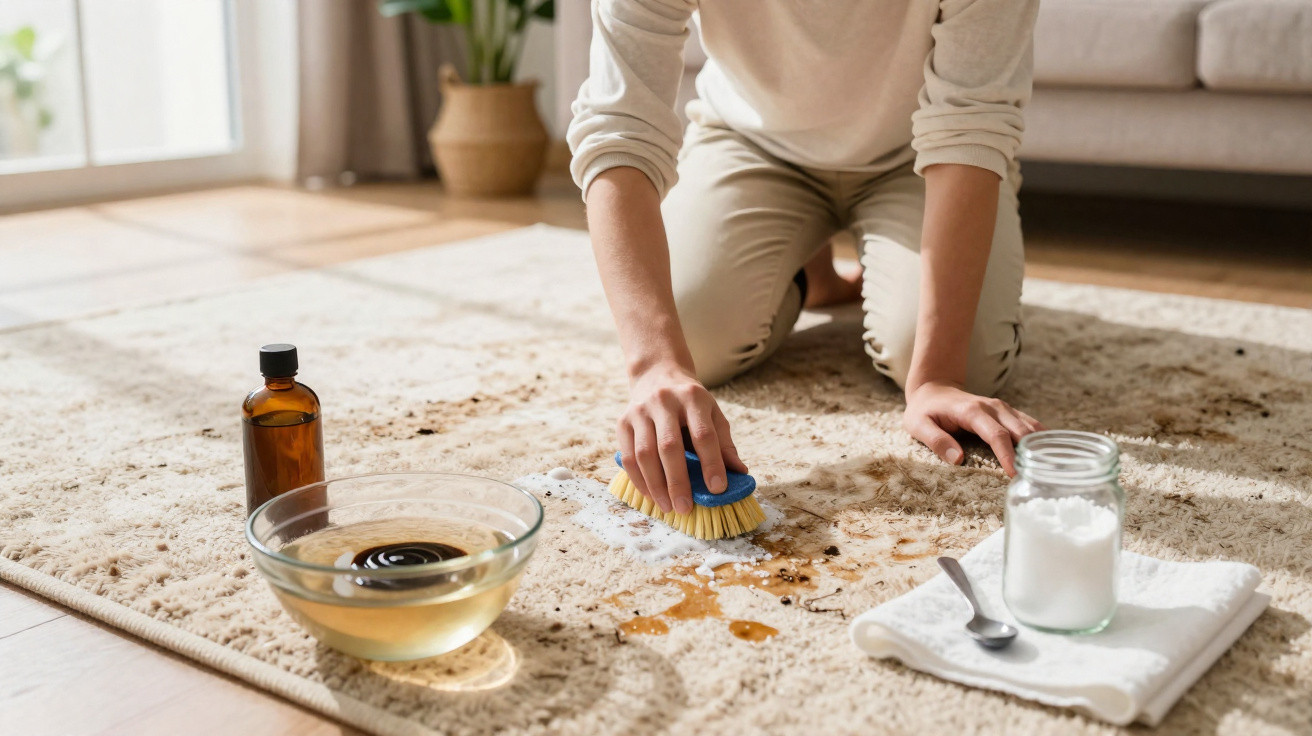
For months, a stubborn stain seemed to taunt me from my pale carpet – until two simple cupboard ingredients changed everything.
The reddish-brown mixture of coffee and sauce had worked its way deep into the fibres. Specialist cleaners, hot water and vigorous scrubbing did nothing to remove it; instead, the mark spread and the pile became dull. The unexpected breakthrough came only after I questioned my automatic cleaning response and tried a far gentler approach.
Why scrubbing makes stubborn carpet stains far worse
When coffee, red wine or sauce is spilt on a carpet, most people instinctively reach for a sponge and start rubbing. That was exactly my mistake. From the fibres’ point of view, however, this reaction is disastrous.
A carpet is rather like a small, densely planted landscape. Scrubbing back and forth vigorously causes several things to happen:
- The liquid is pushed further down between the fibres.
- The dirt spreads outwards, making the stain larger.
- Friction creates heat, effectively setting dyes and sugary residues into the carpet.
- Fibres are flattened or become matted, leaving them permanently lacklustre.
Even when the affected patch looks a little lighter, a kind of “shadow” often remains, becoming especially noticeable in certain light. This is how I ended up with the familiar dirty ring – a lasting outline of the mishap.
Another common mistake makes matters worse: using too much water. If the carpet is thoroughly soaked, the backing and pile retain moisture like a sponge. This can lead to:
- extremely long drying times
- unattractive rings larger than the original stain
- ideal conditions for unpleasant odours
There are also several no-nos that surprisingly many people use: rubbing in circles, blasting the area with a hairdryer on its hottest setting, or combining an assortment of cleaning chemicals. These may briefly feel like you are “doing something”, but they reduce the likelihood of removing a stain without a trace.
“The crucial difference is that professionals do not rub; they work in layers, using little moisture, plenty of patience and a clear sequence.”
The simple two-product carpet cleaning method that saved my carpet
The solution involved two things already found in many homes: liquid black soap and bicarbonate of soda. You also need clean, preferably white cloths and a bowl.
Step 1: Clean with lukewarm water and liquid black soap
In a small bowl, I mixed around 250 millilitres of lukewarm water with one teaspoon of liquid black soap. This combination loosens dirt gently without damaging the fibres.
This was my method:
- Lightly dip a clean white cloth into the solution, then wring it out thoroughly. It should be damp rather than wet.
- Blot the stain from the outside towards the centre, using gentle pressure only.
- Regularly fold the cloth to a clean section, so the dirt transfers into the fabric instead of being pressed back into the carpet.
- Leave the mixture to work for a few minutes, then repeat the process.
For older stains in particular, it is worth carrying out several rounds. It is better to blot carefully five times than scrub harshly once. The key is the amount of moisture: too little leaves the dirt embedded, while too much allows liquid to travel further through the carpet.
To avoid creating fresh edges, I finished by gently blotting a light ring around the treated area with the damp cloth. This creates a soft transition that will not stand out later.
Step 2: Dry and neutralise with bicarbonate of soda
Once I had lifted away the soap residue with a fresh, only slightly dampened cloth, the second essential stage began: bicarbonate of soda.
First, I pressed as much moisture as possible out of the carpet with a dry cloth, again without rubbing. I then scattered an even layer of bicarbonate of soda over the affected area, using roughly two to three tablespoons. Do not press it in; simply sprinkle it loosely over the surface.
The bicarbonate of soda helps to:
- draw remaining moisture from the fibres
- absorb odours
- lift the finest residues still trapped in the carpet
I left the powder on the carpet for several hours, from the afternoon into the evening in my case. Air should circulate in the room, so it is best to leave a window slightly open. Only once the carpet felt completely dry did I vacuum it slowly and carefully, moving in different directions to help the fibres stand upright again.
“After this treatment, the previously ruined patch looked like the rest of the carpet – with no dull shadow, no ring and no odour.”
Adapting the method for different types of carpet stain
Things became particularly interesting in further tests, because not every stain responds in the same way. Depending on what caused it, I adjusted the same basic technique slightly.
Greasy stains (oil, sauce, butter)
These stains cling particularly stubbornly to the fibres. Grease rarely comes away in one go, so I alternated the following steps several times:
- gentle blotting with the soap solution
- sprinkling on bicarbonate of soda again and allowing it to dry
With every round, a little more grease rose to the surface and was caught by either the powder or the cloth. Patience pays off, especially with dark sauces or cooking fat.
Sugary stains (fizzy drinks, syrup, ketchup)
Sugar is the difficult part here. If sticky residue remains in the carpet, the spot attracts dust again and soon looks dirty once more. A thorough mini-rinse was therefore essential:
- use the soap solution sparingly
- rinse with a lightly dampened clean cloth until no residue can be felt
- then use bicarbonate of soda for drying
Coloured stains (red wine, juice, spices)
With intensely coloured liquids, the rule is simple: never drown the stain. Every extra dose of water can draw the colour deeper and wider into the carpet. Short, controlled cycles worked much better: blot briefly, leave it for a short time, blot again, then dry promptly.
Pet accidents
Anyone with children or animals at home will know the issue: an odour can linger even when the discolouration is barely visible. Speed matters here. Immediately after the accident, I:
- absorbed as much liquid as possible with kitchen roll
- then briefly blotted the area with the soap solution
- spread bicarbonate of soda generously and allowed the area to dry completely
The smell disappeared permanently only when the carpet was allowed to dry all the way through, including the deeper layers. Otherwise, the musty note returned after a few days.
Protecting carpets and avoiding common mistakes
Anyone who values their carpet can save a great deal of work by following a few basic rules. Some may sound obvious, but they make a substantial difference to how well stains can be removed.
- Act straight away: The fresher the stain, the greater the chance of removing it without a trace.
- Blot only, never rub: Try to remember this even when you are in a panic.
- Use little water, but use it carefully: Soaking cloths and floods of water cause more harm than good.
- Plan regular care: Vacuuming in several directions lifts the fibres and helps prevent pockets of dirt.
- Use an inconspicuous test area: Always try new products on a corner first.
Many people underestimate how much the type of carpet matters. Deep pile reacts differently from a flat-woven rug, while natural fibres behave differently from synthetic ones. With delicate materials, it is better to keep the amount of soap to a minimum and add an extra gentle round if needed.
Bicarbonate of soda is useful not only for treating stains, but also for occasional refreshing: scatter it lightly across the entire carpet, leave it for several hours, then vacuum thoroughly. This neutralises odours without harsh chemicals or wet shampoos.
Using overly aggressive all-purpose cleaners risks discolouration or brittle fibres. Coloured carpets in particular can fade when strongly alkaline products are used. By comparison, the combination of lukewarm water, a little liquid black soap and bicarbonate of soda is very mild and easy to control – and ultimately made my long-abandoned living-room carpet look almost new again.













Comments
No comments yet. Be the first to comment!
Leave a Comment