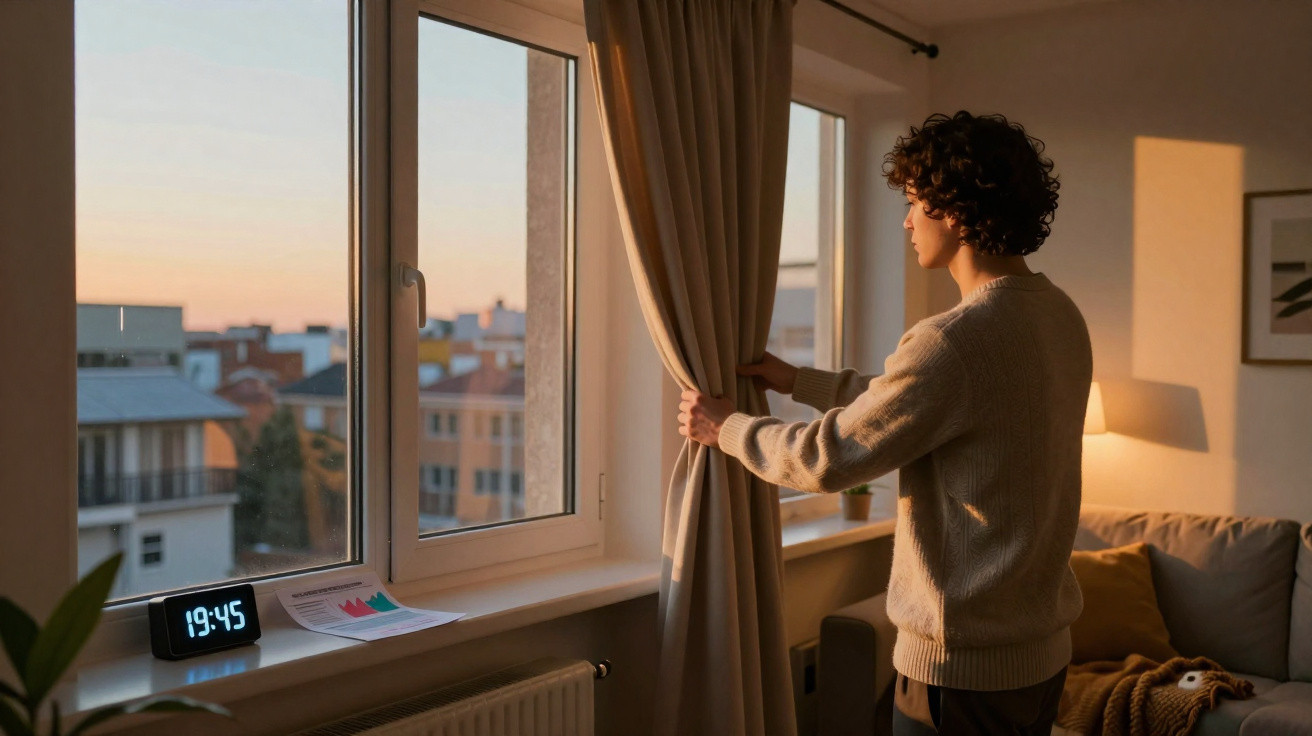
Between sunny spring afternoons and cooler evenings, temperatures can fluctuate noticeably in many homes. Many people instinctively turn the heating back up, then are surprised by the bill at the end of the month. A British energy-saving expert has highlighted a simple, frequently overlooked tip: close the curtains at the right time. It may sound obvious, but it can have a measurable effect on room temperature.
Why curtains become ‘heating helpers’
Windows are the weak point in any home, even where modern double glazing has been fitted. Heat escapes much more quickly through glass than through an insulated wall. This is where curtains help: they create an extra layer of air between the window and the room.
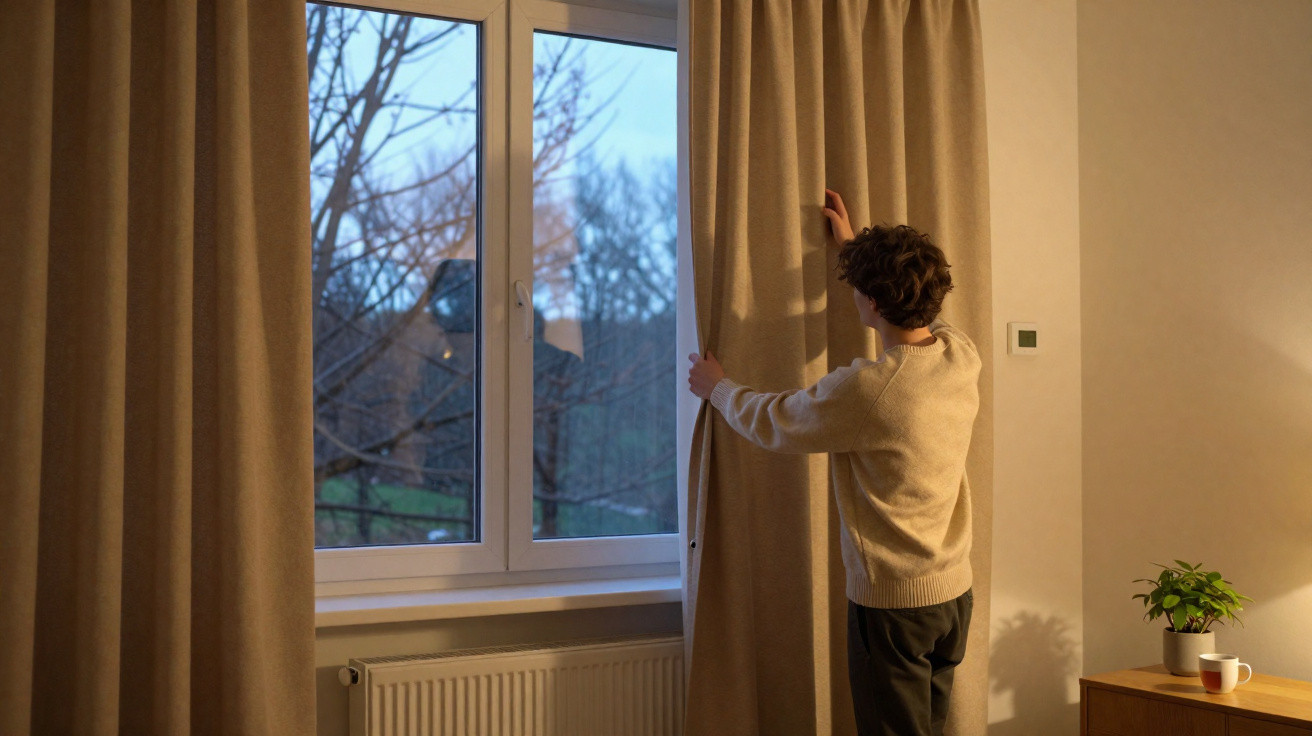
“Anyone who closes their curtains early in the evening creates a simple insulating layer – helping to keep the heat stored during the day in the room for longer.”
While the sun is shining, curtains should remain open during the day. Sunlight gently warms floors, furniture and walls. These surfaces retain the warmth before gradually releasing it again. Once the sun sets, however, the effect reverses: window panes cool down quickly, seemingly drawing warmth out of the room.
Closing the curtains at this point slows that process. This can make a noticeable difference particularly during the change of seasons, when the heating is already being used less, especially in buildings with poor or only moderate insulation.
Why 19:45 becomes a key time from mid-March
By the middle of March, daylight hours across Central Europe become considerably longer. The sun is still relatively high in the afternoon, allowing many homes to benefit from free solar warmth. Towards evening, though, the sun drops more quickly, incoming solar energy falls away and temperatures decline noticeably.
Energy experts recommend making a point of going to the windows and drawing the curtains fully at around 19:45 from mid-March onwards. By then, most of the day’s warmth has already entered the room, direct sunlight has reduced sharply and the sky is cooling perceptibly.
“Closing them at 19:45 ‘preserves’ the accumulated warmth, meaning you may need to adjust the heating later – or not at all.”
Naturally, this time is only a guideline. It depends on where you live, whether there is a balcony outside the window, the orientation of the property and how early the sun actually disappears behind neighbouring buildings. The underlying principle remains the same: draw the curtains soon after sunset, rather than waiting until bedtime.
Thick curtains provide extra insulation
Not every curtain delivers the same result. Thin, lightweight fabric may keep prying eyes out, but it does little to hold back the cold. Heavy, closely woven fabrics or purpose-made thermal curtains are far more effective.
- Heavy fabrics: Velvet, dense cotton or high-weight blended fabrics reduce air circulation around the window.
- Thermal curtains: Lined designs, such as those with fleece or coated fabric, offer particularly good insulation.
- Width and length: Curtains should cover the whole window and ideally reach to just above floor level.
- Distance from the wall: The closer the fabric hangs to the window, the less air can circulate behind it.
Measurements from various studies show clearly higher room temperatures in spaces with dense curtains than in rooms without a textile layer in front of the windows. Depending on window quality and exposure to wind, the difference can be several degrees – and those few degrees often determine whether the heating switches on again or can remain off.
A quick benefit as energy prices rise
Changes in electricity and gas prices have brought the potential for savings into focus for many households. People are already turning down their thermostats, taking shorter showers or replacing light bulbs with LEDs. Managing curtains fits perfectly into this approach: there is no loss of comfort, no compulsory investment and yet a noticeable result.
Energy calculators indicate that reducing the average room temperature by just one degree can cut heating costs by roughly five to six per cent. If curtains stop a room from cooling down as much in the first place, this effect can be achieved without anyone having to feel cold.
“Retaining heat rather than producing it again – that is where the major everyday saving potential lies.”
How to get the most from your curtains
1. Establish a daily curtain routine
Make it part of your routine. A simple schedule could look like this:
- In the morning after getting up: open the curtains fully to let sunlight in.
- In the afternoon: depending on the brightness, partly close blinds or curtains if there is glare, but do not block out the light completely.
- Around sunset, from March at roughly 19:45: close the curtains fully.
Anyone who regularly uses a smart speaker or mobile phone can set a daily reminder, especially at the beginning while the new habit is becoming established.
2. Combine curtains with blinds
Using several layers is especially effective. A typical arrangement could be as follows:
| Layer | Function |
|---|---|
| Curtain on the inside | Creates an air pocket and reduces draughts in the room |
| Blind or pleated blind fitted directly to the window | Reduces cold radiation and protects the glass surface |
| Window frame / seal | Provides the basic insulation and should be intact and airtight |
If you already have a tightly fitting blind installed, placing a thick curtain in front of the window can create a second thermal barrier. The room may feel slightly darker and more enclosed, but it will also be much less draughty.
Common mistakes that ruin the effect
Many people already use curtains but do not make the most of their potential. Common pitfalls include:
- Large gaps at the sides: Heat escapes around the edges when curtains are too narrow.
- Radiators behind curtains: In older properties, curtains often hang directly in front of a radiator. In that case, you are mainly heating the gap by the window – which is bad for your bills.
- Half-open curtain panels: A decorative curtain that barely covers the window may look attractive, but offers almost no energy benefit.
If there is a radiator beneath the window, fit the curtain so that it ends just above the radiator or is guided to the side. The aim is for warm air to flow into the room rather than behind the fabric.
Everyday practical examples
In many user reports, people find that consistently closing curtains in the evening keeps the living-room temperature more stable by one to two degrees. The difference is especially clear in top-floor flats, where window areas are large and roofs are often only moderately insulated.
A typical situation is a south-facing flat, a sunny afternoon and the heating turned on only slightly. Without curtains, the temperature drops noticeably by 23:00; with the curtains closed, the room remains more comfortable and it is enough to use a blanket instead of turning up the thermostat.
Other small measures that strengthen this trick
Anyone already paying attention to room temperature can combine the curtain trick with other straightforward measures:
- Replace sealing strips on old window frames to stop draughts.
- Keep doors to little-used, colder rooms shut so heat does not escape.
- Lay rugs over cold floor areas to increase the perceived warmth.
These steps cost little or nothing, reduce energy use and improve comfort. They are particularly useful in rented homes, where major refurbishment work is not possible, creating a practical set of everyday solutions.
The principle behind them is always the same: warmth that a home absorbs for free during the day should remain in the room for as long as possible. Closing curtains at the right time is a surprisingly effective tool for doing just that – particularly from March, when the sun stays out longer but evenings are still noticeably cool.














Comments
No comments yet. Be the first to comment!
Leave a Comment